Matt Damon Inspired Home Staging Tips for Inviting Celebrity Style
- 5 days ago
- 9 min read
Some celebrity-inspired interiors feel impossible to live in. They photograph well, but they look stiff, expensive, and oddly cold. Matt Damon’s public style points in a different direction: grounded, polished, warm, and quietly confident. That mix makes his aesthetic a useful source of inspiration for staging a home that needs to appeal to real buyers.
His appeal has never rested on flash alone. Damon’s image is rooted in clean lines, ease, intelligence, and an approachable kind of sophistication. Think tailored clothing without loud logos, neutral colors with texture, and spaces that feel comfortable enough for family life but refined enough for a magazine spread.
That is exactly the balance great staging needs. A staged room should help buyers imagine a better version of daily life, not make them feel like they have stepped onto a movie set they are not allowed to touch.

Why Matt Damon’s style works so well for staging
Matt Damon’s style is not about being the loudest person in the room. His public image tends to lean classic, practical, and relaxed. That makes it easy to translate into interiors because most buyers respond well to spaces that feel stable, comfortable, and elevated.
Celebrity aesthetics can be risky in staging when they become too personal. A home styled like a pop star’s neon-filled lounge might get attention, but it may not help a buyer picture breakfast, movie night, or hosting relatives. Damon-inspired design works because it suggests success without shouting it.
The key ingredients are simple:
A neutral foundation Cream, taupe, soft gray, warm white, navy, and deep brown create calm rooms that photograph well.
Natural materials Wood, leather, stone, linen, wool, and ceramic give rooms substance without clutter.
Masculine and soft balance Strong shapes need comfortable fabrics. Dark accents need light walls. Structured furniture needs casual layers.
Rooms that feel socially ready Seating should invite conversation. Dining areas should feel usable. Bedrooms should feel restful rather than staged for display only.
This is where celebrity influence becomes useful. The goal is not to copy a famous person’s home. The goal is to borrow the emotional cues people associate with that person.
With Damon, those cues are trust, warmth, restraint, and quiet confidence.
Build the room around effortless polish
A Matt Damon-inspired room should look like someone with excellent taste lives there, but does not spend every second thinking about decor. That “effortless” look actually takes editing.
Start by removing pieces that compete for attention. Oversized novelty art, mismatched side tables, worn rugs, heavy window treatments, and too many family photos can distract buyers. Then rebuild the room with fewer, better choices.
For a living room, that might mean:
A clean-lined sofa in cream, oatmeal, charcoal, or warm gray
A wood coffee table with a simple shape
One large piece of art rather than several small pieces
Two or three textured pillows
A woven throw
A table lamp with a ceramic, wood, or metal base
A natural-fiber rug that defines the seating area
The effect should feel mature, but not severe. Luxury buyers and first-time buyers alike tend to respond to rooms that look cared for. That care can come through in details as simple as plumped pillows, balanced lighting, and a clear walking path.
If a space feels plain after editing, add texture before adding color. Texture carries the room without making it feel busy. Bouclé, linen, aged leather, woven baskets, matte pottery, and warm wood all create depth while keeping the palette broad enough for mass appeal.
For more structured learning on design decisions like these, browse the staging and interiors resources at Sumptuoza courses. A guided approach can make it easier to see why one room feels inviting while another feels flat.
Use a Boston-inspired sense of warmth
Matt Damon is closely linked with Boston in the public imagination. That does not mean a home needs sports memorabilia or obvious regional references. Instead, think of the qualities often associated with classic New England interiors: sturdy materials, practical comfort, heritage colors, and rooms made for conversation.
A Boston-inspired staging palette might include:
Warm white walls
Navy accents
Walnut or oak wood
Leather details
Framed black-and-white photography
Plaid or herringbone texture
Keeps the home bright and easy to photograph
Adds depth without feeling trendy
Brings warmth and a sense of permanence
Adds character in small doses
Feels personal without being too specific
Works best in pillows, throws, or rugs
The trick is restraint. A navy pillow can look polished. A full nautical theme can look forced. A leather chair can add richness. Too many dark heavy pieces can shrink the room.
For staging, every style choice should answer one question: does this help more buyers feel at home here?

Make spaces feel inviting before they feel expensive
A high-end look means little if the room feels uncomfortable. Buyers respond emotionally first. They notice whether the home feels welcoming, calm, easy to move through, and pleasant to imagine living in.
That is why inviting spaces matter so much. A buyer may not remember the exact brand of a sofa, but they will remember how the room made them feel.
Use these staging moves to create warmth fast.
Create a conversation layout
Place seating so people can talk without twisting around. Avoid pushing every piece of furniture against the wall unless the room is very narrow. Even a small living room can feel more welcoming when the chairs, sofa, and table relate to one another.
A good rule: every seat should have access to a surface for a drink or book. That small detail signals comfort.
Layer the lighting
One overhead fixture rarely flatters a room. Use at least two sources of light in main living areas when possible. Floor lamps, table lamps, sconces, and natural light all add softness.
Warm bulbs often make a home feel more relaxed than cool, bluish light. Keep bulb color consistent from room to room so the home feels cohesive.
Set a scene without overdoing it
A bowl of lemons in the kitchen, folded towels in a bathroom, a book and ceramic cup on a side table, or a simple tray on the bed can suggest daily life. Keep these scenes subtle. Buyers should not feel like they are looking at props.
Use scent carefully
Fresh air matters more than fragrance. Strong candles, plug-ins, or sprays can make buyers wonder what is being hidden. If scent is used, keep it light and natural, such as clean linen, cedar, or a barely noticeable citrus note.
Bring celebrity aesthetics down to earth
Celebrity style works in staging when it feels aspirational but still reachable. Matt Damon’s public persona helps because it is not built around excess. His style suggests someone who values quality, comfort, privacy, and real life.
That gives stagers a practical template.
Choose quality cues rather than luxury labels
A room does not need recognizable designer items to feel elevated. Buyers notice proportion, condition, texture, and placement first.
Quality cues include:
Thick drapery hung high and wide
Matching nightstands with balanced lamps
A rug large enough to sit under key furniture
Art scaled correctly for the wall
Bedding that looks crisp and layered
Hardware and fixtures that look clean and current
Small upgrades can create a stronger effect than one expensive statement piece. For example, replacing dated cabinet pulls, updating lampshades, and adding a large neutral rug may change a room more than buying a dramatic chair.
Keep the palette calm but not sterile
Many staged homes go too far with white and gray. The result can feel cold. Damon-inspired staging benefits from warmer neutrals and grounding accents.
Try combinations like:
Cream, camel, walnut, and black
Warm white, navy, oak, and linen
Taupe, charcoal, stone, and aged brass
Soft gray, brown leather, ivory, and olive
These palettes feel mature and cinematic without stealing attention from the home itself.
Add one memorable focal point
Every major room needs one clear moment. It could be a fireplace, a large window, a dining table, a bed, or a beautiful piece of art. Staging should support that focal point rather than compete with it.
If the room has a fireplace, arrange seating around it. If the room has a view, keep furniture low and window treatments simple. If the bedroom has strong natural light, use soft bedding and minimal furniture so the room feels restful.
This is part of what makes Home staging so powerful. It guides attention toward the home’s best features while softening anything that might distract.

Stage each room with a Damon-inspired lens
A consistent style helps the whole home feel more valuable. Buyers should not move from a calm living room into a chaotic bedroom or from a polished kitchen into a neglected entry. The celebrity-inspired look needs to carry through the home in a quiet way.
Living room
Aim for relaxed confidence. Use comfortable seating, substantial tables, layered lighting, and art that feels grown-up but not polarizing.
Avoid overly themed decor. A few books, a sculptural vase, and a textured throw can do more than shelves packed with objects.
Kitchen
Keep counters mostly clear. Add warmth through wood cutting boards, a ceramic fruit bowl, a small plant, or folded linen towels. If cabinets or counters feel cold, natural textures can soften the space.
Celebrity-style staging in a kitchen should suggest ease. Think Sunday breakfast, friends stopping by, and enough room to cook without clutter.
Dining room
A dining room should feel ready, not staged for a banquet. Use a simple centerpiece, such as a low bowl, greenery, or candles. Keep place settings minimal unless the table looks empty without them.
Make sure chairs are evenly spaced and the rug, if used, is large enough for chairs to move without catching at the edge.
Bedroom
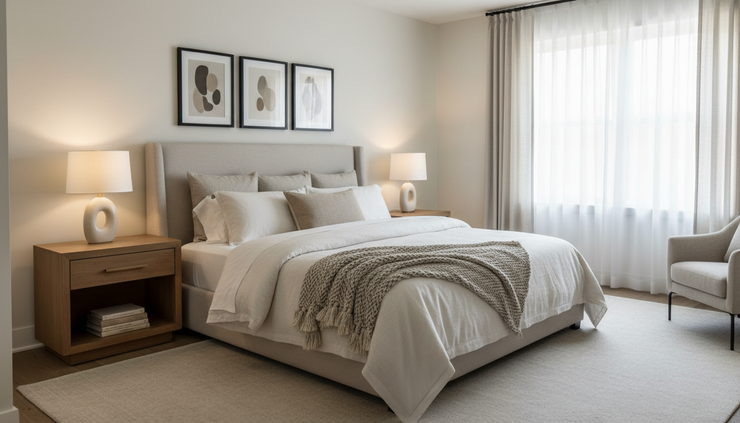
This is where the understated celebrity look shines. Use hotel-level neatness with homelike warmth.
Layer the bed with:
Crisp sheets
A neutral duvet or quilt
Two to four pillows, depending on bed size
One textured throw at the foot of the bed
Nightstands should match in mood, even if they are not identical. Add lamps, one simple object, and maybe a book. Keep personal items out of sight.
Bathroom
Bathrooms need to feel clean above all else. Use white or neutral towels, clear counters, and one spa-like detail, such as eucalyptus, a small stool, or a stone tray.
Avoid too many products on display. A buyer should see calm, not someone else’s routine.
Avoid the mistakes that make celebrity-inspired staging feel fake
The biggest risk with celebrity-inspired staging is turning inspiration into imitation. A home should never look like a themed tribute. It should look like the best version of itself.
Watch for these common mistakes.
Too much glamour
High shine, gold everywhere, oversized mirrors, and dramatic furniture can feel theatrical. Use glamour in small amounts. A brass lamp or black-framed mirror can add polish without taking over.
Furniture that ignores scale
Celebrity homes often have large rooms. Most homes do not. Oversized sectionals, huge beds, and bulky dining sets can make a normal room feel cramped.
Measure before placing furniture. Leave clear paths through each room. A home feels more expensive when movement feels easy.
Personal style that narrows the buyer pool
Strong art, bold colors, religious items, political objects, or very specific hobbies can make buyers focus on the current owner instead of the home. Staging should leave enough room for imagination.
Cold minimalism
Too little decor can look unfinished. A room with only a sofa, rug, and blank walls may photograph cleanly, but it often lacks emotional pull. Add warmth through lighting, texture, and a few well-chosen objects.
If these choices feel hard to judge, a structured Home staging course can help train the eye. The resources at https://www.sumptuoza.com/courses are a useful place to explore design principles, room styling, and ways to create broader buyer appeal.
A simple Matt Damon inspired staging plan
Use this quick plan before photos, showings, or open houses.
Edit the room
Remove anything worn, distracting, overly personal, or visually heavy.
Warm up the palette
Keep the base neutral, then add wood, linen, leather, stone, or soft metal.
Create a clear focal point
Let buyers know where to look first.
Make seating feel social
Arrange furniture for conversation, not just wall coverage.
Add quiet luxury
Use better lighting, larger art, crisp bedding, fresh towels, and natural textures.
Check the feeling
Step into the room as if seeing it for the first time. It should feel calm, welcoming, and easy to live in.
Photograph and adjust
Rooms often look different through a camera. If something feels cluttered in the photo, remove it. If the room feels flat, add texture or a warmer light source.
The real lesson from Matt Damon’s appeal
Matt Damon’s influence on staging trends is less about copying a celebrity home and more about understanding why his style works. It feels familiar but refined. It suggests success without distance. It makes polish feel human.
That is the sweet spot for selling a home. Buyers want to be impressed, but they also want to feel welcome. A space with warm neutrals, honest materials, thoughtful lighting, and comfortable layouts can create that feeling quickly.
Celebrity-inspired staging should never overpower the property. It should help the home feel more memorable, more livable, and more desirable.
For a clearer path from inspiration to execution, explore staging and design courses from Sumptuoza. The right guidance can help turn a good-looking room into one that connects with more buyers.
The takeaway is simple: borrow the confidence, not the celebrity. Aim for rooms that feel calm, warm, edited, and ready for real life. That is the kind of star quality buyers can actually see themselves living in.


