One Piece Inspired Home Staging Tips to Transform Your Space
- 21 hours ago
- 7 min read

A memorable room works a lot like a great adventure story. It has a clear mood, a few standout details, and enough breathing room for someone to imagine themselves inside it.
That is why One Piece offers such a fun lens for staging a home. The series is known for bold color, nautical references, layered personalities, and a sense of movement from one island to the next. Those same ideas can help a room feel warm, distinctive, and ready for its next chapter.
The key is restraint. A staged home should not look like a themed party or a fan collection. It should borrow the feeling of adventure, freedom, warmth, and discovery, then translate those ideas into design choices buyers can connect with. That balance is where training matters. Sumptuoza Home Staging Education courses can help develop the eye, structure, and confidence needed to turn creative inspiration into polished, market-ready spaces.
Use color like a storyteller, not a collector
One Piece uses color with confidence. Islands, ships, clothing, and food all create quick emotional signals. The lesson for staging is not to fill a room with every bright shade at once. It is to choose a palette that tells a clear story.
For a living room, try a base of soft white, sand, driftwood, or warm gray. Then bring in one or two stronger accents:
Ocean blue for calm and trust
Coral or terra-cotta for energy
Sun-washed yellow for warmth
Deep green for a lush, island feel
Black or charcoal for contrast and structure
This gives the room personality while still keeping it broad enough for buyers. Home staging works best when the space feels special, but not too specific.
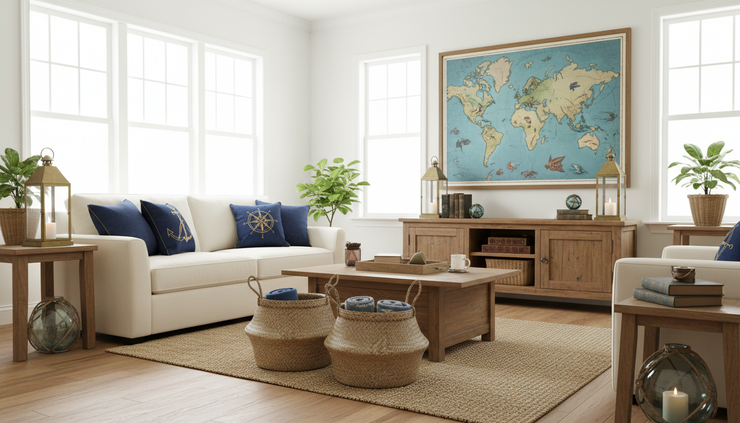
A simple One Piece inspired palette might include cream walls, a natural jute rug, a navy sofa throw, brass lamps, and a coral accent pillow. The result feels adventurous without becoming costume-like.
This is also the kind of decision that benefits from professional study. Sumptuoza Home Staging Education courses cover the thinking behind color, mood, buyer perception, and room balance. Creative ideas become much stronger when they are supported by design basics.
Build each room around a clear destination
Every arc in One Piece has a destination. The crew may move through chaos, danger, humor, and celebration, but the viewer always understands where the story is going.
A staged room needs that same clarity.
Before moving furniture or adding decor, choose the room’s main purpose. A buyer should understand it within a few seconds. Is the space for relaxing, dining, reading, working from home, or hosting friends? Once the purpose is clear, every item should support it.
For example, a flexible bonus room can easily feel like leftover space. Give it a defined role instead:
A reading nook with a cozy chair, side table, and lamp
A guest room with simple bedding and a small luggage bench
A music or hobby area with clean shelving and controlled accessories
A family lounge with a compact sofa, soft rug, and board games
Think of it as choosing the “island” for the room. Each space gets its own identity, but the whole home still feels connected.
The Sumptuoza Home Staging Education courses can be especially helpful here because staging is not only decorating. It is decision-making. It teaches how to read a floor plan, assign purpose, and guide attention through the home.

Add adventure through texture and materials
One of the easiest ways to reference the adventurous spirit of One Piece is through texture. The series often evokes ships, sea air, markets, maps, rope, treasure, food, and handmade objects. Those ideas translate beautifully into interiors.
Use physical materials that suggest travel and character:
Woven baskets
Jute or sisal rugs
Linen curtains
Weathered wood
Ceramic bowls
Brass or aged metal accents
Rope details in small doses
Leather trays or ottomans
These objects add depth without making the room feel busy. They also photograph well, which matters when homes are viewed online before buyers ever visit in person.
A dining room, for example, can feel like a welcoming galley without looking literal. Use a wood table, simple white dishes, woven placemats, a low bowl of citrus, and two blue glass vases. Add a large piece of art with abstract waves or a coastal landscape. That is enough.
The goal is to create a feeling of “come gather here.” That feeling connects directly to the heart of One Piece, where meals, friendship, and shared purpose often matter as much as the journey.
Create focal points with bold but limited choices
A good room needs a captain. Without one, the eye does not know where to land.
In staging, the focal point may be a fireplace, window, bed, sofa, dining table, or piece of art. One Piece inspired staging can use a bold focal point, as long as the rest of the room stays calm.
Try one of these ideas:
A map-inspired wall piece
Choose an abstract map, vintage-style coastal print, or oversized framed chart. Avoid anything that looks like a poster from the show. The reference should feel grown-up and design-forward.
A statement rug
A rug with blue, cream, coral, or gold can anchor the room and add movement. Keep upholstery simpler so the rug can shine.
A styled shelf with collected objects
Use a few books, a ceramic vase, a small brass compass-style object, and a framed landscape. Leave empty space between items. Empty space makes the display feel curated.
A bed with layered linens
In a bedroom, use crisp white bedding as the base, then add a navy quilt, textured pillows, and a warm wood bench. This creates a peaceful “captain’s quarters” feeling without becoming too themed.
Learning how much is enough takes practice. This is one reason a home staging course can be useful for decorators, real estate professionals, and creative homeowners. Sumptuoza Home Staging Education courses help train the eye to edit, scale, and style rooms for real buyers, not just for personal taste.

Keep the theme subtle enough for buyers to imagine their own story
The biggest risk with any pop culture inspiration is going too far. A home for sale should invite many kinds of buyers. If the theme becomes too obvious, some people will feel like guests in someone else’s world.
Use the “one step removed” rule.
Instead of displaying character art, use color and mood. Instead of pirate flags, use nautical lines and natural materials. Instead of collectibles, use art, books, lamps, and textiles that carry the same sense of exploration.
Here is a simple way to translate inspiration:
Direct fan reference | Staging-friendly version |
Character posters | Abstract coastal art |
Pirate props | Brass lanterns or rope-textured baskets |
Bright themed bedding | White linens with blue and gold accents |
Collectible shelves | A curated mix of books, ceramics, and travel objects |
Ship decor everywhere | One or two nautical details in a neutral room |
This approach keeps the home marketable. It also shows taste and intention, which buyers notice even if they cannot name why the room feels good.
Sumptuoza Home Staging Education courses can help sharpen this skill. Students learn how to take inspiration from many sources and adapt it for scale, demographics, photography, and sale appeal.
Stage the entry like the start of a journey
The entry sets the tone fast. In One Piece, the start of a journey always carries momentum. A staged entry should do the same, but in a calm and practical way.
Start with these basics:
Clear the floor of extra shoes, bags, and clutter
Add a slim console table if space allows
Use one mirror to reflect light
Place a tray or bowl for keys
Add a small lamp or warm wall light
Finish with one natural element, such as greenery or branches
For a subtle adventure feel, use a round mirror that hints at a porthole, a woven runner, or a framed coastal print. Keep it clean. The entry should say, “This home is cared for,” before buyers see anything else.
A strong entry also helps the home feel larger and more organized. It gives the eye a clean path forward, which is one of the core goals of staging.
Make outdoor spaces feel like their own island
Patios, balconies, and porches deserve attention. A small outdoor area can become a selling point when staged with care.
Think of each outdoor area as its own little island. It needs a clear purpose, not a pile of leftover furniture.
A compact balcony might need only:
Two chairs
A small table
One outdoor rug
A potted plant
A lantern or battery candle
A larger patio can support a dining area or lounge zone. Use weather-friendly cushions in ocean blue, sand, or warm clay. Add plants with broad leaves for a relaxed, tropical touch.
This is where the spirit of One Piece fits naturally. The show celebrates travel, open air, friendship, and shared meals. A staged patio can suggest all of that through simple, buyer-friendly choices.

Use professional training to turn inspiration into repeatable skill
Creative inspiration is exciting, but professional staging requires more than good taste. It calls for planning, editing, styling, market awareness, and the ability to make choices that support a home’s best features.
Training helps answer common staging questions:
Which furniture should stay, and which should go?
How much color is too much?
What photographs well in listing images?
How do you style a room without making it feel personal?
How can a small budget create a strong impression?
What changes matter most before a showing?
The Sumptuoza Home Staging Education courses are designed to build these kinds of skills. They can help students connect creativity with structure, which is exactly what a One Piece inspired concept needs. The imagination creates the spark. Training turns that spark into a room that feels polished, balanced, and ready to sell.
This matters whether staging a single room, preparing a property listing, or building a service-based staging career. A strong education helps create work that is not only attractive, but also intentional.
Bring it all together with a memorable but market-ready look
A One Piece inspired staged home should feel adventurous, warm, and full of possibility. It should not feel like a set piece.
Start with a neutral base. Add confident color. Use natural textures. Give every room a clear purpose. Choose one focal point. Edit anything that feels too personal or too literal. Then look at the space the way a buyer would, both in person and through photos.
The best version may be more subtle than expected. A navy pillow, a woven rug, a brass lamp, and a framed coastal print can carry the idea beautifully. A staged table with citrus, ceramics, and linen napkins can suggest hospitality and travel without saying a word.
For anyone who wants to build stronger staging skills, the next step is guided practice. Explore the Sumptuoza Home Staging Education courses to learn how professional training can sharpen creativity, improve room planning, and support more confident staging decisions.
A great staged space does what every good adventure does. It opens the door, sparks curiosity, and helps people imagine where life could go next.


