Star Trek Enterprise Inspired Home Staging Futuristic Decor Tips
- 7 days ago
- 8 min read
A staged room has one job: help a buyer picture a better version of everyday life. That may seem far away from a starship, but Star Trek: Enterprise offers a surprisingly useful design lesson. The show’s interiors were futuristic, yet not cold. The NX-01 felt technical, compact, purposeful, and human.
That balance matters in real estate. A room can look stylish and still feel unlivable. It can look futuristic and still feel warm. The best science fiction interiors do both. They suggest possibility without making people feel like they need a user manual to sit on the sofa.
For sellers, stagers, and design-minded homeowners, the goal is not to turn a living room into a replica starship set. The smarter move is to borrow the show’s visual language: clean lines, layered lighting, metallic accents, efficient layouts, and a sense of calm order. If you want to build a stronger design foundation before trying these ideas, the courses at Sumptuoza can help you connect creative concepts with practical staging choices.
Why Star Trek Enterprise design works for modern interiors
Star Trek: Enterprise sits in an interesting place within the franchise. It is set before the sleek, highly polished starships seen in later timelines. That makes the NX-01 feel closer to our world. Its interiors mix machinery, utility, and comfort. The result is a future that still feels reachable.
That is exactly why it works as staging inspiration.
Many buyers respond to spaces that feel updated but not alienating. They want homes that look current, efficient, and easy to live in. A starship-inspired room can suggest:
Better use of space
Clear circulation paths
Soft but purposeful lighting
Minimal clutter
Durable materials
A calm, confident mood
The design language of the show also avoids waste. Rooms on a starship have to work hard. Corridors are narrow, storage is built in, surfaces are practical, and every object appears to have a reason to exist. That mindset translates well to staging, especially in condos, townhomes, smaller single-family homes, and multipurpose spaces.
Home staging works best when it removes friction from a buyer’s imagination. A room inspired by Enterprise can feel smart, fresh, and organized while still leaving space for the buyer’s own life.
Start with the starship principle of purpose
The NX-01 was not decorated for decoration’s sake. Its rooms suggested mission, function, and readiness. In a staged home, that same rule keeps sci-fi styling from becoming gimmicky.
Before adding a metallic lamp or a glowing wall panel, ask one question:
Does this choice make the room feel easier to understand, more comfortable, or more memorable?
If the answer is no, skip it.
A staged living room should make its purpose clear within seconds. A bedroom should feel restful. A dining area should invite conversation. A home theater can carry more sci-fi character, but it still needs to feel usable. Buyers should never wonder what a room is supposed to be.
Try these purpose-first moves:
Keep walkways open and direct
Use furniture with slim profiles
Choose storage that hides visual clutter
Limit accent pieces to a few strong items
Repeat materials so the room feels intentional
For example, a small den can become a “command center” without looking theatrical. Use a sleek writing table, a compact lounge chair, dimmable lighting, and one sculptural shelf. Avoid fake control panels or oversized props. The suggestion is stronger than the literal reference.
For a more structured way to practice these choices, explore design and staging lessons through Sumptuoza courses. Learning how to edit a room is often more useful than learning how to fill one.
Use clean lines without making the room feel sterile
Science fiction interiors often rely on clean geometry. In Star Trek: Enterprise, that shows up through smooth panels, tight layouts, horizontal lines, and built-in-looking features. Modern staging can borrow those ideas, but it needs softness too.
A room with only hard edges can feel cold. A room with only soft elements can feel unfocused. The sweet spot is contrast.
Pair futuristic lines with tactile comfort:
Low-profile sofa
Glass or metal coffee table
Smooth wall panels
Modular shelving
Sleek dining chairs
Add a textured throw in charcoal, cream, or deep blue
Place it over a soft wool or woven rug
Balance them with linen curtains
Style it with ceramics, books, and a small plant
Use a warm wood table to ground the room
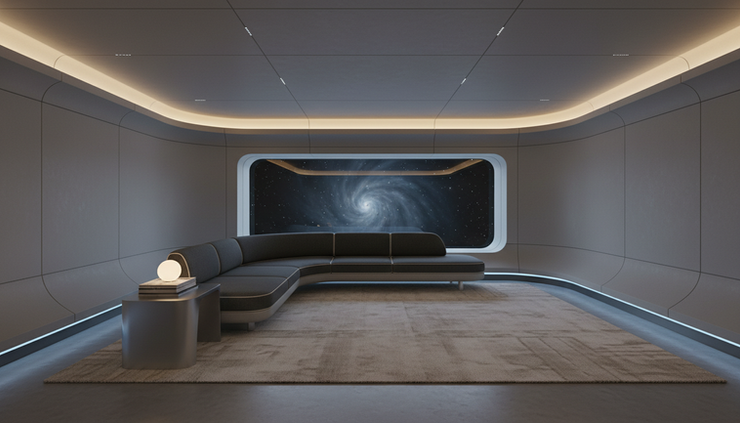
Curved furniture is especially useful. It echoes the rounded forms often found in starship interiors, while making a room feel more relaxed. A curved sofa, round dining table, oval mirror, or arched floor lamp can soften the sharpness of modern decor.
Keep the color palette controlled. A strong sci-fi look does not require neon everywhere. In fact, a restrained palette usually feels more expensive. Try warm gray, soft white, graphite, muted navy, brushed steel, and a small amount of amber or blue light.

Let lighting create the futuristic mood
Lighting is one of the easiest ways to bring a sci-fi aesthetic into a staged home. It is also one of the easiest places to go too far.
The goal is not a nightclub glow. The goal is layered light that makes the home feel calm, polished, and memorable.
Think of the lighting on Enterprise. It often feels practical and atmospheric at the same time. Workspaces are visible. Corridors have depth. Quarters feel quieter. That same layered approach works in a house or apartment.
Use three levels of light:
Start with soft ambient light
Ambient light is the general glow in the room. Recessed lighting, ceiling fixtures, and shaded lamps can all do the job. Choose warm white bulbs for living spaces and bedrooms. Cooler light can work in kitchens, bathrooms, or utility areas, but too much cool light can make a home feel clinical.
Add hidden accent light
This is where the sci-fi influence shines. Place LED strips under floating shelves, behind a media console, under kitchen cabinets, or along a headboard. Keep the effect subtle. Buyers should notice the mood before they notice the fixture.
Blue light can suggest science fiction, but use it carefully. A small blue accent behind shelving may look refined. A whole room washed in blue may feel hard to live with. Amber, soft white, and pale blue usually work better than saturated color.
Use task lighting to show function
A reading lamp near a chair, pendant lights over an island, and sconces beside a bed all help buyers understand how the room works. This practical layer keeps the futuristic mood from feeling staged in the wrong way.
If you are drawn to lighting design and want to learn how it supports better interiors, browse the course options at Sumptuoza. Good staging often comes down to what people feel when they enter, and lighting drives that feeling fast.
Choose materials that suggest the future without shouting
Sci-fi decor tends to use materials that look smooth, engineered, and durable. For staging, the best options are familiar materials with a futuristic edge.
Good choices include:
Brushed nickel or brushed steel
Matte black hardware
Frosted glass
Acrylic accent pieces
Smooth stone-look surfaces
High-quality laminate with a clean finish
Wood with a straight grain
Textured ceramics in simple shapes
Avoid making every surface shiny. Too much gloss creates glare and can make photos look harsh. It can also make a space feel less welcoming in person. Mix matte and reflective finishes so the room has depth.
For example, a bedroom can feel quietly futuristic with a matte black bed frame, white bedding, two brushed metal lamps, and a single piece of abstract art. A kitchen can feel more current with under-cabinet lighting, simple bar stools, clear counters, and updated cabinet pulls.
The reference to Star Trek: Enterprise should feel like inspiration, not imitation. Buyers do not need to know the source. They only need to feel that the space is organized, modern, and easy to move into.
Create a welcoming atmosphere for potential buyers
A staged home cannot rely on style alone. Even the most impressive futuristic room will fail if it feels uncomfortable. Buyers make practical judgments, but they also respond to mood. They notice where they would sit, how the room feels in natural light, and whether the home seems cared for.
A welcoming atmosphere starts with warmth.
Add human texture through:
Soft throws and pillows
Natural wood tones
Fresh greenery
Warm lighting
Clean scents
Comfortable seating arrangements
Art that feels calm rather than aggressive
This is where Enterprise offers another useful design cue. The ship was built for exploration, but the crew still needed places to rest, eat, talk, and recover. A home needs that same emotional range. It can suggest ambition and still feel safe.
Place seating so people can imagine conversation. Keep bedrooms restful rather than dramatic. Make dining areas feel simple and ready. Use decor that appeals broadly, especially if the home is going on the market.
The best futuristic staging leaves buyers with a clear feeling: this home is modern, but it is also livable.
Add sci-fi accents in small controlled doses
A little science fiction styling can make a home stand out online and in person. Too much can narrow the buyer pool. The key is to make the room feel elevated rather than themed.
Use accents that hint at the genre:
Geometric art
Choose abstract pieces with clean lines, orbital shapes, star maps, or soft gradients. Avoid posters or show-specific imagery when staging for sale. Art should widen appeal, not turn the home into a fan room.
Statement lighting
A sculptural pendant, globe lamp, or slim LED floor lamp can become the room’s futuristic anchor. Keep the rest of the room quieter so the lighting feels intentional.
Modular furniture
Nesting tables, storage ottomans, sectional sofas, and wall-mounted shelves all suggest flexibility. They also help buyers see how a space can adapt.
Metallic details
Use metal in hardware, lamp bases, picture frames, or a single accent chair. Keep the finish consistent. Mixing too many metals can make a room feel busy.
Tech that looks integrated
Smart thermostats, flush speakers, hidden charging stations, and cable management all support the futuristic mood. Visible cords break the illusion fast. Tuck them away before showings and listing photos.
If you are staging your own home and feel unsure where to stop, a Home staging course can help you develop an editor’s eye. The learning resources at Sumptuoza are a helpful next step for turning inspiration into balanced rooms.
Adapt the Enterprise look room by room
A whole-home design plan works best when each room shares a common thread. That does not mean every room should look the same. Use a consistent palette, repeated materials, and similar lighting temperature to create flow.
Room | Starship-inspired idea | Staging-friendly execution |
Entry | Arrival point | Add a slim console, round mirror, and warm wall light |
Living room | Crew lounge | Use curved seating, low tables, and layered light |
Kitchen | Efficient workspace | Clear counters, add under-cabinet lighting, update hardware |
Bedroom | Crew quarters | Keep bedding soft, use symmetry, choose calm colors |
Bathroom | Clean utility space | Use white towels, matte hardware, and simple storage |
Bonus room | Mission-ready flex space | Stage as reading room, media room, or hobby space |
The entry deserves special attention. It forms the first impression. A futuristic entry should still feel warm. Avoid harsh white light or bare walls. A simple mirror, a place for keys, a small plant, and one sleek light fixture can set the tone.
In the living room, give buyers space to breathe. Do not push every piece of furniture against the walls. Float seating when possible. Let the room feel arranged, not stored.


