Star Trek Home Staging Ideas for Futuristic Decor and Storytelling
- 7 days ago
- 8 min read
A room can feel unforgettable before anyone notices the furniture brand, the paint color, or the square footage. That is true on screen, and it is true in a home for sale. One of the best pop culture lessons in visual impact comes from Star Trek: The Original Series, a show that built a convincing vision of the future with bold color, clean forms, dramatic lighting, and strong narrative purpose.
The bridge of the Enterprise was not cluttered. The captain’s chair had presence. Consoles suggested technology without needing realistic detail. Every set told viewers where they were, what mattered, and how people were meant to move through the space.
That is the heart of strong staging. A staged home should not only look neat. It should help people imagine a life unfolding there.
For anyone studying design, real estate presentation, or room styling, the connection is surprisingly useful. If you want to build stronger staging skills beyond inspiration boards, the courses at Sumptuoza can help turn creative ideas into practical staging choices.

Why Star Trek still works as design inspiration
Star Trek: The Original Series first aired in the 1960s, yet many of its design choices still feel useful because they were clear and intentional. The sets used simple geometry, crisp color blocking, repeated shapes, and focused lighting. They did not try to fill every corner. They gave each space a job.
That matters in staging because buyers read a room quickly. They do not need every possible feature explained. They need visual cues.
A strong staged room answers basic questions fast:
Where do people gather?
What is the focal point?
How does light move through the space?
Does the room feel calm, useful, and memorable?
Can someone picture living here?
The Enterprise bridge is a good model because it centers attention. The command chair sits in the middle. Workstations wrap around it. The viewscreen creates a clear front. Even if a viewer knows nothing about starships, the room makes sense.
Home staging works the same way. A living room might center on a fireplace, a window, or a conversation area. A bedroom might center on a balanced bed wall. A dining room might use lighting and table placement to signal connection and comfort.
The lesson is simple: design the room so the eye knows where to go.
Use color like a signal, not a costume
The original series is famous for strong color. Gold, blue, red, black, silver, and warm neutrals gave the screen energy. Those colors also helped define roles and create visual order.
In home decor, the goal is not to recreate a starship uniform palette. That can feel too literal. The better move is to use sci-fi color logic in a polished way.
Try this approach:
Use one bold accent color
Keep the base calm
Repeat the accent
Avoid theme overload
Let cobalt blue, deep red, mustard, or teal show up in pillows, art, a vase, or a chair.
Use white, cream, charcoal, walnut, stone, or soft gray to ground the room.
Place the color in two or three spots so it feels planned.
Skip costumes, posters, and obvious collectibles when staging for a broad market.
A sci-fi accent should create interest without becoming the whole story. A blue velvet chair near a neutral sofa can nod to the future. A red sculptural lamp can bring energy to a reading area. A gold-toned mirror can add warmth and a subtle connection to midcentury space-age design.
If the property already has a modern kitchen, angular fireplace, floating staircase, or large windows, color can strengthen those features. Use contrast to guide the eye toward what the home does best.
This is where training helps. A good design choice often depends on proportion, buyer appeal, and photography. A home staging course can help connect creative concepts with the practical details that make rooms photograph well and feel approachable in person.
Choose futuristic shapes that still feel livable
The most useful sci-fi design elements are often shapes, not props. Star Trek used circles, curves, grids, angled panels, and sleek surfaces to suggest technology and movement. Modern staging can borrow that language in subtle ways.
Look for pieces with clean silhouettes:
Curved sofas or barrel chairs
Oval coffee tables
Rounded mirrors
Globe lamps
Slim metal frames
Low platform beds
Modular shelving
Sculptural side tables
Simple geometric art
A single curved chair can soften a boxy room. An oval table can improve flow. A round mirror can break up straight lines and brighten a hallway. These moves feel modern, but they do not shout for attention.
The key is balance. Too many futuristic shapes can make a room feel cold or staged in the wrong way. Pair sleek forms with texture. Add a knitted throw, linen bedding, warm wood, a woven rug, or matte ceramics. The space should feel like someone could sit down, pour coffee, and relax.
Futuristic staging works best when it feels human first and theatrical second.
This is one reason the original Enterprise sets still have charm. They suggest advanced technology, but the characters bring warmth, tension, humor, and friendship into the frame. A staged home needs that same mix of polish and comfort.

Light the room like a scene
Lighting may be the strongest link between sci-fi television and staging. The original series used lighting to shape mood, separate areas, and make simple sets feel more dimensional. Staging can use the same idea, without theatrical extremes.
Every room needs layers:
Ambient lighting
This is the main light source, such as ceiling fixtures or natural daylight.
Task lighting
This supports a function, such as reading, cooking, grooming, or working on a hobby.
Accent lighting
This adds drama and draws attention to art, texture, shelving, plants, or architectural features.
For a Star Trek inspired touch, think about glow rather than glare. LED strips under shelves, hidden lighting behind a media wall, or a soft lamp near a plant can create a sense of depth. Warm white light usually feels better for staging than harsh blue or purple. Use colored light sparingly, like a faint accent, not a nightclub effect.
Photography also matters. A room that looks good in person can look flat online if the lighting is uneven. Open blinds, turn on lamps, and remove heavy shadows where possible. If a sci-fi element is part of the decor, make sure it supports the photo rather than distracting from the room.
For example, a sleek table lamp with a smoked glass shade can look sophisticated. A glowing model spaceship on a shelf may delight a fan, but it can narrow the emotional appeal of the room. When selling or preparing a home for broad viewing, aim for mood over memorabilia.
Create inviting spaces with a mission
The Enterprise was designed around purpose. The bridge supported command. Sickbay supported care. Engineering suggested power and movement. Each set had a mission.
A staged home should do the same. Every room needs a clear reason to exist.
A spare room should not feel like a storage zone with a chair in it. Give it an inviting role. It might become a guest room, reading lounge, meditation space, music room, or creative studio. A breakfast nook should show morning ease. A patio should hint at fresh air and simple gatherings.
Use this simple process:
Name the function
Decide what the space is meant to do before choosing decor.
Create a focal point
Use furniture, art, a view, a rug, or lighting to anchor the scene.
Support movement
Leave enough space for people to walk through naturally.
Add signs of life
Use a book, tray, vase, folded throw, or plant to suggest use without clutter.
Edit hard
Remove anything that does not support the room’s mission.
This is where Home staging becomes more than decorating. Decorating often reflects the current owner. Staging speaks to the next person. It uses design to invite imagination.
If that distinction feels subtle, studying examples can sharpen the eye. The courses at Sumptuoza offer a useful path for learning how to make rooms feel intentional without making them feel artificial.

Tell a story buyers can step into
The strongest parallel between Star Trek and staging is storytelling. The show was never only about starships and gadgets. Its best episodes used future settings to explore courage, ethics, discovery, conflict, and connection. The setting served the story.
In staging, the home is the setting. The buyer becomes the main character.
That does not mean every room needs a heavy theme. In fact, the best staging stories are quiet. They suggest a lifestyle through small, believable details.
A staged kitchen might tell the story of easy weeknight cooking with a bowl of lemons, clean counters, and two stools placed for conversation. A bedroom might tell the story of rest with layered bedding, soft lamps, and uncluttered surfaces. A living room might tell the story of gathering with seats angled toward each other.
Sci-fi elements can support that story when they point toward possibility:
A reading corner that feels like a calm observation deck
A media room with sleek lighting and comfortable seating
A child’s bedroom with subtle stars, not overwhelming space decor
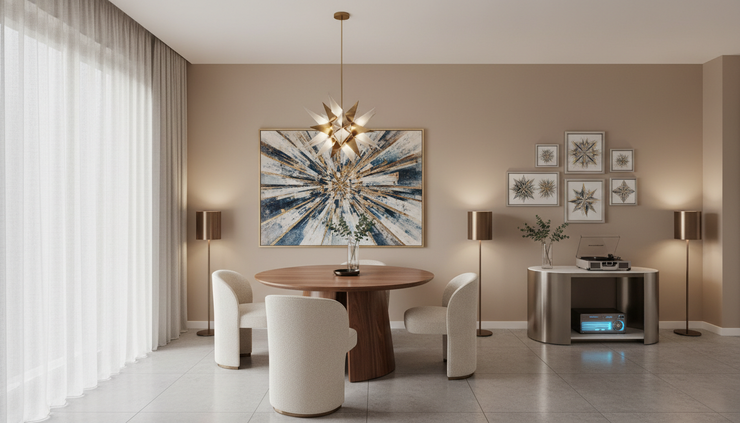
A dining area with sculptural chairs and a pendant light that feels artful
A hallway with rounded mirrors and soft wall lighting for a gentle future-forward feel
The goal is not to say, “This home has a Star Trek theme.” The goal is to create a feeling of exploration, order, comfort, and imagination.
Good storytelling also requires editing. The original series sets were memorable partly because the viewer could understand them at a glance. Staging needs the same restraint. Too many objects create noise. Too few objects can feel sterile. The sweet spot is enough detail to make the home feel alive, with enough openness for buyers to imagine their own belongings.
Make sci-fi decor feel elegant, not gimmicky
There is a fine line between inspired and literal. A staged home should not feel like a convention display. Even when the owner loves science fiction, broad appeal matters.
Use this guide to keep the look elevated:
Inspired choice | Risky choice |
Abstract star map art | Large character posters in main rooms |
Curved furniture | Full spaceship-themed furniture sets |
Metallic accents | Shiny silver on every surface |
Soft LED shelf lighting | Bright colored lights throughout the room |
Geometric patterns | Busy galaxy prints on many textiles |
Minimal collectibles | Crowded display shelves |
A few pieces can carry the idea. A black and white abstract print may suggest deep space. A chrome floor lamp can add a futuristic note. A low-profile console can make a media area feel clean and advanced. These touches photograph well and appeal to people who may not be sci-fi fans.
Texture keeps the room grounded. Mix smooth metal with boucle, velvet, wool, rattan, leather, stone, or wood. The future feels more inviting when it has something to touch.
Do not forget scent and sound during showings. Keep scent light and fresh. Avoid anything too sweet or artificial. If audio is appropriate, use low-volume instrumental music rather than theme music. The room should feel calm, not staged for performance.
Bring the Enterprise mindset into real homes
The best Star Trek inspired staging is less about copying a set and more about thinking like a set designer. Every item has a reason. Every color carries attention. Every light source shapes mood. Every room supports a story.
Before a showing or photo session, walk through the home and ask:
What is the first thing the eye sees?
Does the room have a clear purpose?
Is there one memorable design feature?
Are the sci-fi touches subtle enough for many buyers?
Does the space feel warm, clean, and easy to enter?
What story does this room tell in five seconds?
That last question matters most. Buyers make fast emotional judgments. They may later compare square footage, school zones, commute times, and price. Yet the first feeling comes from the room itself.
A home staged with a light sci-fi influence can feel fresh, orderly, and imaginative. It can suggest a future without becoming cold. It can make a familiar floor plan feel special.
The final frontier is emotional connection
Star Trek: The Original Series made viewers believe in strange new worlds by giving those worlds structure, mood, and meaning. Great staging works in a similar way. It helps people believe in a possible future inside a real home.
Use color with purpose. Choose shapes that guide movement. Layer lighting. Add sci-fi hints with restraint. Most of all, build a story that buyers can enter without needing an explanation.
For more help turning creative staging ideas into rooms that feel polished, memorable, and market-ready, explore the design and staging options at Sumptuoza courses. The right skills can help a room do what the Enterprise did so well: invite people to imagine what comes next.


