The Great British Bake Off Inspired Home Staging Tips to Attract Buyers Like a Pro
- Aug 27
- 8 min read
Updated: 5 days ago

A beautifully staged home has more in common with a perfect showstopper cake than most people think. Both need structure, taste, restraint, and a memorable first impression. On The Great British Bake Off, bakers do not just make something edible. They create something inviting, polished, and emotionally appealing under close inspection.
That same mindset can transform the way a home appears to buyers.
Home staging is not about filling rooms with pretty things. It is about helping someone imagine a better version of life in the space. A buyer should walk in and feel the same pull a judge feels when a cake looks balanced, fresh, and irresistible.

Great staging starts with the same mindset as great baking
On the show, success rarely comes from one dramatic detail. A winning bake usually works because every element supports the whole. The sponge has the right texture. The filling adds interest. The decoration feels controlled. The final presentation tells a clear story.
A staged home works the same way.
A buyer notices the overall impression first, then the details. If the entry feels cluttered, the lighting is dim, or the furniture blocks natural flow, the home may feel smaller or less cared for. If everything feels balanced, clean, and intentional, buyers tend to relax. They can focus on possibility instead of problems.
Think of each room as a bake with three layers:
Structure
The layout should make sense. Furniture needs to support movement, conversation, and the purpose of the room.
Flavor
Color, texture, artwork, and accessories give the space warmth and personality without distracting from the home itself.
Finish
Clean surfaces, neat styling, good lighting, and fresh details create the polished look buyers remember.
The goal is not perfection for perfection’s sake. The goal is clarity. Buyers should understand the home quickly and feel welcomed by it.
Presentation matters before anyone takes a close look
Bake Off bakers know the judging starts before anyone takes a bite. A cake that leans, cracks, or looks unfinished creates doubt. A polished presentation builds confidence.
In a home, the same principle begins at the curb.
The front door, porch, walkway, and entry set the tone. Buyers begin forming an opinion before they step inside. A freshly swept path, clean windows, a tidy doormat, trimmed plants, and warm entry lighting can make the home feel cared for right away.
Inside, presentation depends on what the eye sees first. Each room should have a clear focal point. It might be a fireplace, a large window, a styled bed, or a dining table. If there is no natural focal point, create one with art, lighting, or furniture placement.
Simple presentation tips that work:
Remove small visual distractions from counters, shelves, and tabletops.
Use trays to group items so surfaces look styled rather than crowded.
Keep furniture legs and pathways visible to make rooms feel more open.
Style beds with crisp layers and pillows that look full but not fussy.
Make dining areas feel ready for use with a simple centerpiece or place settings.
A strong presentation does not need to be expensive. It needs to feel intentional. A clean coffee table with a book, a small vase, and one warm texture can do more than a crowded surface full of decor.
Color schemes should feel delicious, not overwhelming
One of the joys of The Great British Bake Off is watching bakers use color with confidence. Pastels, jewel tones, chocolate glazes, citrus accents, and soft creams all send a message before the flavor is revealed.
Staging color works the same way. Color affects mood, scale, and perceived value. A balanced palette helps buyers connect emotionally without feeling like they are stepping into someone else’s strong personal style.
For most properties, a staged home benefits from a calm base. Warm whites, soft grays, oatmeal, taupe, sand, and quiet greige tones help rooms feel fresh and spacious. Then, add controlled color through pillows, art, flowers, throws, dishes, or small decorative pieces.
Think of color the way a baker thinks of garnish. A little can guide the eye. Too much can take over.

A Bake Off inspired color approach might look like this:
Bake Off inspiration | Staging interpretation |
Vanilla sponge with berry filling | Warm neutral room with berry-toned pillows or art |
Lemon tart | White kitchen with small yellow accents and fresh greenery |
Chocolate ganache | Rich wood tones, cream textiles, and black metal accents |
Pistachio and cream | Soft green accessories with warm white bedding |
Floral celebration cake | Fresh flowers paired with simple, quiet decor |
The trick is repetition. If you use soft green in a bedroom, repeat it in two or three small places, such as a pillow, artwork, and a vase. This makes the color feel planned rather than random.
Avoid overly themed rooms. Buyers should notice the home first, then the styling. The color should support the architecture, light, and purpose of the room.
Create an atmosphere buyers want to step into
The Bake Off tent feels welcoming because it combines skill with warmth. There is plenty of light, visible work surfaces, comforting textures, and a sense of occasion. Even with time pressure, the setting feels inviting.
A staged home should create that same feeling of ease.
Atmosphere comes from more than furniture. It comes from scent, temperature, sound, light, and spacing. Buyers may not name these details out loud, but they feel them.
Start with lighting. Open curtains and blinds before showings. Replace burned-out bulbs. Use lamps in darker corners. Aim for a warm, natural look rather than harsh overhead light. A room that glows feels more livable.
Next, focus on comfort. Sofas and chairs should invite people to sit. Beds should look restful. Dining spaces should suggest connection. Kitchens should feel clean, practical, and ready for everyday use.
Add atmosphere with details that suggest life without making the home too personal:
A bowl of lemons or green apples on the kitchen counter.
Fresh flowers or simple branches in the entry.
A folded throw on a reading chair.
A clean hand towel and small plant in the bathroom.
A cookbook open on a stand in the kitchen, if it suits the space.
Be careful with scent. Heavy candles, plug-ins, and strong sprays can make buyers wonder what is being covered up. Fresh air, clean surfaces, and light natural scents are safer. If you want a food-related cue, keep it subtle, such as a clean kitchen with a small bowl of citrus.
Stage the kitchen like a signature challenge
The kitchen is one of the easiest places to borrow inspiration from The Great British Bake Off. On the show, workstations are tidy, ingredients are organized, and tools are placed with purpose. The scene says, “Something good can happen here.”
A staged kitchen should send that same message.
Buyers want to see counter space, storage, cleanliness, and function. They are not looking for every appliance you own. Pack away mixers, extra gadgets, dish racks, paper piles, magnets, and most countertop items. Leave only what helps the room feel useful and beautiful.
A strong kitchen staging plan may include:
One attractive cutting board leaning against the backsplash.
A small bowl of fruit.
A clean tea towel.
A simple vase or herb pot.
One cookbook or cake stand if it fits the style of the home.
If the kitchen has open shelving, reduce the number of items. Use matching dishes, glassware, or neutral ceramics. Leave space between objects. Empty space makes shelves feel curated and storage feel generous.
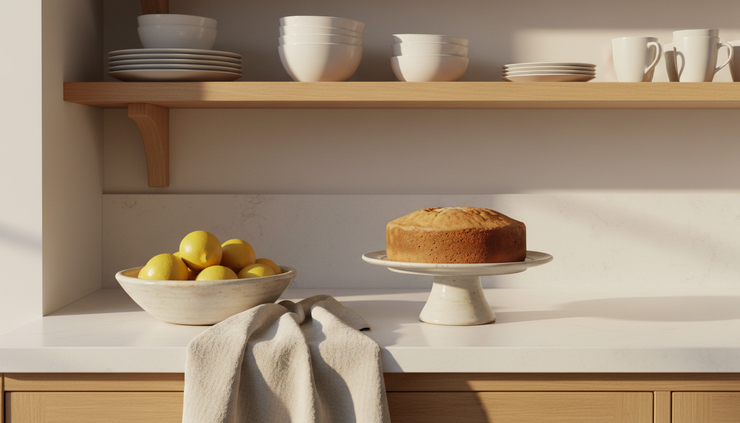
Pay special attention to cleanliness. Ovens, sinks, faucets, cabinet fronts, grout, and refrigerator handles all get noticed. Like a judge checking texture and bake, buyers inspect the finish. A spotless kitchen builds trust.
Use texture like a baker uses layers
A great cake has contrast. Soft sponge, smooth cream, crisp decoration, glossy glaze. Without texture, even a pretty bake can feel flat.
Interior styling works the same way. Texture gives rooms depth, especially when the color palette stays neutral. It makes spaces feel warm in photos and comfortable in person.
Good staging textures include:
Linen or cotton bedding.
Woven baskets.
Wood trays.
Ceramic vases.
Wool or knit throws.
Natural fiber rugs.
Smooth glass or metal accents.
The key is balance. Too many rough textures can feel rustic or heavy. Too many shiny surfaces can feel cold. Mix soft, matte, smooth, and natural materials so each room feels finished.
Bedrooms benefit from texture most. A simple bed can look high-end with layered bedding, two sleeping pillows, two larger pillows, one accent pillow, and a folded throw. Keep the palette calm. Let texture do the work.
Living rooms also need softness. If the furniture has clean lines, add pillows, a rug, plants, and warm lighting. If the room has heavy furniture, lighten it with pale textiles and simple decor.
Edit like a Bake Off judge
One of the hardest staging skills is knowing what to remove. Bakers often get feedback when they add too many flavors or decorative ideas. The same thing happens in homes. Too many pieces compete for attention.
Before listing, walk through the home with a critical eye. Better yet, take photos of each room. Photos reveal clutter, awkward furniture placement, and distracting color faster than standing in the space.
Ask three questions in every room:
What is the purpose of this room?
What should buyers notice first?
What can be removed to make the room feel larger, brighter, or calmer?
Common items to edit include family photos, collections, extra chairs, bulky storage pieces, pet supplies, personal toiletries, visible cords, and seasonal decor that feels too specific. The home should still feel warm, but it should not feel so personal that buyers struggle to picture themselves there.
Strong staging works because it gives buyers enough beauty to feel inspired and enough breathing room to imagine their own life.
This is often where training helps. A trained stager sees scale, proportion, color, and buyer psychology in ways that are hard to notice when you live in the home every day.
Build skills with Sumptuoza Home Staging Education
Bake Off contestants improve because they practice specific skills. They learn structure, timing, finish, and presentation. Staging skills also improve with guided learning, especially when the goal is to create spaces that photograph well and appeal to buyers.
Sumptuoza Home Staging Education offers courses designed to help people strengthen their staging eye and apply professional techniques with more confidence. Course topics can support skills such as room layout, buyer-focused styling, color selection, occupied staging, vacant property presentation, and building a staging process that works in real homes.
For homeowners, this can make preparation less stressful. Instead of guessing what to keep, move, or buy, training helps make choices with purpose. For aspiring stagers, education can build a stronger foundation for client work, property styling, and market-ready presentations.
A Home staging course can be especially helpful for learning how to:
Read a room quickly and identify what is holding it back.
Choose color palettes that appeal to a broad buyer pool.
Style shelves, beds, tables, and kitchens for photos and showings.
Work with what is already in a home before buying new decor.
Understand the difference between decorating for living and staging for selling.

If you want to sharpen your staging skills with a more professional eye, explore the course options at Sumptuoza Home Staging Education.
The winning recipe is simple, but every detail counts
A Bake Off inspired approach to staging is really a lesson in thoughtful presentation. Start with a clear structure. Choose colors with care. Create warmth through light, texture, and simple details. Edit anything that distracts from the home’s best features.
Buyers may not notice every pillow, vase, or line of sight. They will notice how the home feels.
When a property feels clean, calm, spacious, and inviting, it becomes easier to imagine living there. That emotional connection is the real showstopper.


