Toy Story Home Staging Tips for Vibrant Spaces and Storytelling
- 6 days ago
- 8 min read
A staged home works best when buyers feel something before they start measuring rooms. That feeling might be warmth, curiosity, comfort, energy, or the quiet sense that life could unfold easily there.
That is where Toy Story offers an unexpected lesson. The film is remembered for its color, its carefully placed characters, and its clear emotional arc. Every room, toy, and scene helps tell a story. Nothing feels random. The same idea applies to selling a home.
Home staging is not just about making a property look clean and current. It is about helping buyers imagine a beginning, middle, and future inside the space. A room should answer a simple question: “What could my life feel like here?”
If you want to build that skill with more structure, the staging and design programs at Sumptuoza courses can help connect creative ideas with practical staging decisions.

Color can set the emotional tone before buyers notice the furniture
Toy Story uses color with purpose. Andy’s room feels bright, safe, and energetic. The sky-blue wall and playful accents create a world that feels loved and lived in. The colors support the mood of the story before any character speaks.
Staging can use the same principle. Color is one of the fastest ways to shape emotion in a home. A room with muddy tones and mismatched accents can feel tired, even if the furniture is expensive. A room with a clear palette feels intentional.
That does not mean every home should look like a toy box. The goal is not to copy the film. The goal is to borrow its confidence.
Start with a base that feels broad and buyer-friendly:
Warm white
Soft gray
Greige
Sand
Light taupe
Natural wood tones
Then add color in controlled places. Think of accent color as the supporting cast. It should help the room feel alive without stealing the scene.
Good places to add color include:
Throw pillows
Artwork
Books
Ceramic bowls
Bedding
Area rugs
Small lamps
Fresh flowers or greenery
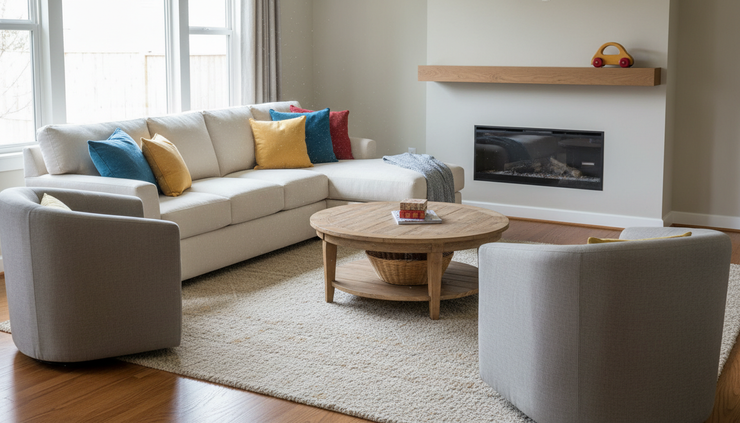
A living room might use a calm neutral sofa, a blue accent chair, and a few red or yellow details. A child’s room might use playful color through bedding and wall art, while keeping large furniture simple. A kitchen might feel brighter with a bowl of green apples, a patterned runner, and warm wood cutting boards.
The lesson from Toy Story is not “use more color.” It is use color to create a feeling.
If a room should feel restful, use soft blues, warm whites, and natural textures. If it should feel social, try warmer accents like rust, mustard, terracotta, or coral. If it should feel fresh and clean, use crisp whites with green plants and light wood.
For more practice choosing palettes that support a sale, explore the design-focused lessons at https://www.sumptuoza.com/courses.
Character placement teaches us how to guide the eye
The toys in Toy Story are placed with care. In group scenes, each character has a position, role, and relationship to the others. Woody often anchors the scene. Buzz may stand apart when his identity is in question. Smaller toys fill in the world around them.
That kind of placement matters in staging too.
Every room needs a visual lead. In a living room, the lead might be the sofa, fireplace, window view, or coffee table. In a bedroom, it is usually the bed. In a dining room, it is the table. Once that lead is clear, everything else should support it.
A common staging mistake is giving every object equal importance. Too many chairs, side tables, plants, pillows, and keepsakes can make a room feel noisy. Buyers do not know where to look. Their eyes bounce around, and the room feels smaller than it is.
Instead, arrange the room like a strong scene.
Give each piece a role:
The anchor piece
This is the main object that defines the room’s purpose.
The supporting pieces
These help make the room useful and balanced.
The emotional details
These add warmth, such as books, a throw blanket, art, or a tray.
The background pieces
These finish the space without asking for attention.
A sofa facing a pair of chairs creates conversation. A bed centered on the main wall creates calm. A dining table with simple place settings tells buyers the room is ready for gathering.
Placement also affects movement. In Toy Story, scenes feel clear because characters do not block the action. In homes, furniture should not block the way buyers walk through a room. Leave enough space to move naturally between pieces. Open paths make a home feel larger, easier, and more comfortable.
Storytelling turns a clean room into a memorable room
A clean room can impress buyers. A story can stay with them.
That is why Toy Story has such lasting appeal. The film is not only about toys. It is about belonging, change, loyalty, and the fear of being replaced. The setting supports those themes. Andy’s room is not just a room. It is a world where friendship and imagination feel possible.
Staging works best when it suggests a life buyers want to step into.
A staged kitchen can tell a story of easy mornings. A breakfast nook can suggest slow Sunday coffee. A guest room can suggest welcome and care. A patio can suggest summer evenings with friends. These stories do not need to be dramatic. In fact, the best staging stories are simple and believable.
Think about the story each space should tell:
Room | Story to suggest | Simple staging cue |
Entry | This home feels calm and welcoming | A clean console, mirror, lamp, and small bowl |
Living room | People gather here comfortably | Balanced seating, soft textiles, warm lighting |
Kitchen | Daily life feels easy here | Clear counters, fresh fruit, simple styling |
Bedroom | This is a peaceful retreat | Layered bedding, soft lamps, uncluttered nightstands |
Dining area | Meals and connection happen here | Centerpiece, chairs pulled into place, subtle place settings |
Patio | Outdoor living is part of the home | Seating, cushions, planters, lanterns |
The key is restraint. Staging should create an invitation, not a script that feels too personal.
Avoid overly specific details, such as family photos, monogrammed items, religious objects, political material, or hobby collections that dominate a room. Buyers need enough space to imagine their own story.
A good staging story feels like this:
Someone lives well here.
The home is cared for.
The rooms have purpose.
Daily routines would feel pleasant.
Special moments would feel natural.
That is the same emotional structure that makes Toy Story work. The spaces support the heart of the story.
If storytelling is the part of staging you want to strengthen, a Home staging course through Sumptuoza can help you practice turning rooms into clear, buyer-friendly narratives.
Use playful details without making the home feel themed
A Toy Story inspired room does not need cowboy prints, rocket shapes, or cartoon references. Literal themes can feel too narrow when preparing a home for sale. Buyers should notice the feeling, not the reference.
The better approach is to translate the film’s design language into adult-friendly staging.
Think in terms of:
Cheerful color
Rounded shapes
Friendly textures
Clear focal points
Organized collections
Warm lighting
A sense of movement and life
For example, instead of filling a room with toys, use one playful object on a bookshelf. A small wooden figure, a sculptural puzzle, or a vintage toy truck can add charm without making the room feel childish.
Instead of bright primary colors everywhere, use one or two rich accents against a neutral backdrop. A navy pillow, a red ceramic bowl, and a yellow book can nod to the energy of animated storytelling while still feeling polished.
Instead of themed wall art, choose art that feels optimistic. Abstract shapes, simple landscapes, or colorful prints can lift the room without making it feel like a child’s playroom.
This approach works especially well in:
Family rooms
Playrooms
Kids’ bedrooms
Bonus rooms
Finished basements
Short-term rental staging
Model homes with a family-friendly audience
The goal is emotional clarity. A room can feel happy, warm, and imaginative while still looking ready for the market.

Create inviting spaces by staging for memory
Buyers rarely remember every room equally. They remember moments.
This is why a small reading chair by a sunny window can matter. So can a breakfast tray on a bed, a bench near the entry, or a pair of chairs on a porch. These moments help buyers attach emotion to the property.
Toy Story is full of memorable visual moments because the scenes are built around feeling. A toy left alone on a bed. A group gathered in Andy’s room. A bright spaceship-like figure standing out among familiar toys. Each image carries meaning.
In staging, memory comes from contrast and focus.
A room becomes more memorable when it includes:
One clear focal point
One emotional cue
One touch of texture
One reason to pause
A bedroom might have a beautifully made bed, two warm lamps, a soft throw, and a book on the nightstand. A bathroom might have fluffy white towels, eucalyptus, and a simple tray. A living room might have a cozy seating arrangement and a warm lamp glowing in the corner.
These details help buyers feel the room rather than simply inspect it.
Lighting does a lot of the work here. Harsh overhead lighting can flatten a room. Layered lighting creates comfort. Use lamps, natural light, mirrors, and soft bulbs to make spaces feel warmer.
Texture matters too. Buyers may not touch everything, but they can sense softness and quality through photos and in-person showings. Add texture with:
Linen
Cotton
Bouclé
Woven baskets
Wood
Ceramic
Wool rugs
Soft throws
Emotion comes from sensory cues. A staged room should look good, but it should also suggest how it feels to live there.
Edit like a filmmaker before the home goes live
Animated films go through careful editing. Scenes get refined until the story is clear. Staging needs the same discipline.
Before listing photos happen, walk through the home as if you are seeing it for the first time. Better yet, take phone photos from the doorway of each room. Photos reveal distractions the eye ignores in person.
Look for anything that weakens the story:
Cords
Too many pillows
Small clutter
Crooked art
Oversized furniture
Dark corners
Empty walls
Crowded shelves
Personal photos
Worn rugs or bedding
Editing does not mean stripping the home until it feels cold. It means removing anything that competes with the room’s purpose.
A well-edited room has breathing space. Buyers can see the walls, windows, flooring, layout, and function. They can imagine their own belongings there, but they still feel guided by the scene in front of them.
This is where many sellers and new stagers struggle. They remove too much and create a blank room, or they leave too much and create visual noise. The middle ground is where the best staging lives.
If you want a more guided way to learn that balance, the training options at https://www.sumptuoza.com/courses offer a practical next step.

Bring the Toy Story approach into every room
The real connection between Toy Story and staging is intention. The film’s color choices, character positions, and emotional beats all serve the story. A well-staged home should do the same.
Use color to create mood. Place furniture so the eye knows where to go. Add details that suggest a life buyers want. Edit anything that distracts from the room’s purpose.
When a home feels clear, warm, and memorable, buyers spend more time with it. They understand how the rooms work. They picture daily routines. They start to imagine belonging there.
That is the power of storytelling in staging homes for sale. It turns square footage into possibility.
To keep building that skill, explore the full course library at Sumptuoza courses and learn how to create spaces that feel polished, inviting, and ready for their next story.


