America’s Next Top Model TV Show Inspired Home Staging Lessons for Selling Success
- Aug 27
- 9 min read
Updated: 4 days ago

A room can lose a buyer in the same way a photo can lose a judge, within seconds. The lighting feels flat. The angle hides the best feature. The styling distracts instead of supports. Nothing is technically wrong, yet the whole presentation fails to land.
That is where an unexpected source of inspiration comes in: America’s Next Top Model. At first glance, a modeling competition and preparing a home for sale seem far apart. One features photo shoots, runway challenges, and critiques. The other focuses on furniture placement, focal points, flow, and market appeal.
Look closer, and the connection is clear. Both are about presentation with purpose. A model learns how to understand the camera, use angles, tell a story, and create an emotional response. A well-staged home does the same for buyers.
The Sumptuoza Home Staging Education courses build on this kind of visual thinking. They help turn instinct into skill, so staging choices become intentional rather than decorative guesses.

Make a strong first impression before the buyer studies the details
On America’s Next Top Model, the first frame matters. A model may have great potential, but if the first image lacks energy or clarity, the judges notice. The same idea applies when someone steps through the front door of a listed home.
Buyers form an opinion fast. Before they inspect square footage or closet size, they feel the space. Does it feel bright? Calm? Spacious? Updated? Welcoming?
That first impression often starts in these places:
The entryway
The main living area
The kitchen sightline
The primary bedroom
The transition from outside to inside
A strong opening moment does not need to be dramatic. It needs to be clean and clear. A console table with one lamp, a mirror, and a simple bowl can feel more polished than a crowded entry filled with shoes, bags, and personal items.
Think of the front door as the first runway walk. The home does not get time to explain itself. It has to communicate immediately.
Sumptuoza Home Staging Education courses often appeal to people who want to sharpen this exact skill: seeing a space the way a buyer sees it, not the way an owner has grown used to it.
Understand angles like a photo shoot director
A major lesson from modeling is that angles change everything. A slight turn of the face, a shift in posture, or a different camera height can turn an average shot into a memorable one.
Homes also have angles. Some flatter the space. Others work against it.
A room may look smaller when furniture blocks the longest sightline. A sofa placed with its back to the entrance can make a living area feel closed off. A bed centered on the wrong wall can make a bedroom feel awkward, even when the room has good proportions.
Before moving furniture, stand in the places where buyers and photographers will naturally look:
Just inside the doorway
At the edge of the main hallway
From the kitchen toward the living room
From the patio door back toward the interior
From the corner where listing photos will likely be taken
Ask one question: What is the room showing from here?
If the answer is clutter, cords, empty corners, oversized furniture, or a blocked window, the angle needs work.
Home staging is not only about how a room looks in person. It also has to perform well in listing photos, where most buyers meet the property first. That makes angle awareness a core skill.
Use styling to support the story rather than steal the scene
The show’s styling challenges often make one point clear: wardrobe, hair, makeup, and setting should support the concept. When styling competes with the model, the image becomes confusing.
The same happens in a staged home. Accessories should help buyers understand the room, not distract from it.
A bowl of lemons in a kitchen can suggest freshness. A folded throw on a chair can add warmth. A tray on a coffee table can create order. By contrast, too many decorative objects can make a room feel noisy.
Good styling answers practical questions quietly:
Where would people gather?
How would this room feel at the end of the day?
Is the space casual, refined, family-friendly, or low-maintenance?
What lifestyle does the home suggest?
The goal is not to force a fantasy. The goal is to make the home’s best possible life easy to imagine.
A small condo may benefit from sleek, space-saving pieces and light colors. A suburban family home may need a comfortable dining setup, organized storage cues, and a warm living area. A luxury property may call for fewer pieces, stronger textures, and more restraint.
This is where training matters. Taste alone is not enough. The Sumptuoza Home Staging Education courses give structure to decisions that many people otherwise make by trial and error.
Edit with the discipline of a judging panel
One of the most useful parts of America’s Next Top Model is the critique. Contestants see what worked, what missed, and what needs to change. The feedback may be direct, but the process teaches refinement.
Staging needs the same discipline.
Most homes are not improved by adding more. They improve when someone edits with purpose. That means removing what weakens the buyer’s experience, even when those items seem harmless.
Common items to edit include:
Extra chairs that interrupt traffic flow
Small rugs that make rooms feel chopped up
Personal photos that pull attention away from the property
Heavy window treatments that block natural light
Countertop appliances that make kitchens feel short on space
Decor that does not match the home’s likely buyer
Editing is not the same as emptying. A bare room can feel cold, and many buyers struggle to judge scale without furniture. The art lies in keeping enough to define the space while removing what creates friction.
A helpful exercise is to photograph each room, then review the images as if they belonged to someone else. Photos reveal problems the eye has stopped noticing. A crooked lampshade, crowded shelf, or dark corner becomes obvious on screen.
That review process mirrors the photo panel on the show. The camera tells the truth.

Create a clear focal point in every important room
A strong fashion image usually has one clear subject. The viewer knows where to look. The pose, lighting, and styling work together to direct attention.
Rooms need the same visual hierarchy.
Without a focal point, buyers scan without settling. The room may feel unfinished even if the furniture is expensive. With a focal point, the space feels intentional.
In a living room, the focal point might be:
A fireplace
A large window
A well-placed sofa area
A piece of art
A view to the backyard
In a bedroom, it is usually the bed. In a dining room, it is the table. In a bathroom, it may be a clean vanity, beautiful tile, or natural light.
Once the focal point is clear, every choice should support it. Furniture should face it or frame it. Accessories should not compete with it. Lighting should help it stand out.
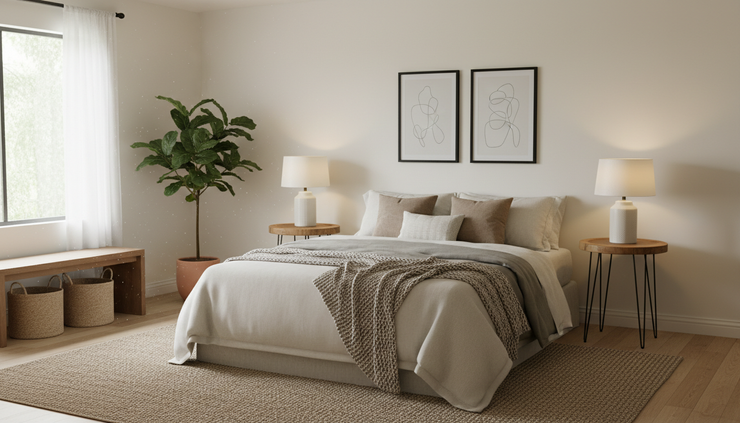
This does not mean every room needs a dramatic feature. Sometimes the focal point is simply a well-made bed with layered textiles and art above it. The key is confidence. A buyer should not have to decode the room.
The Sumptuoza Home Staging Education courses can help develop this kind of visual decision-making. Instead of copying looks from photos, the aim is to understand why certain rooms feel balanced and why others feel off.
Work with lighting as if the camera is always watching
In modeling, lighting can define bone structure, create mood, and shape the entire image. Poor lighting can flatten even the strongest pose.
A home has the same challenge. Dim rooms feel smaller. Harsh overhead lighting can make finishes look less appealing. Uneven lighting can create dark corners that suggest neglect.
The best staged spaces use layered light:
Natural light from clean, open windows
Ambient light from ceiling fixtures
Task light from lamps or under-cabinet lighting
Accent light to add warmth and depth
Before a showing or photo shoot, walk through the home at the same time buyers may see it. Notice where light falls and where it disappears. Open blinds, clean glass, replace weak bulbs, and use lamps to soften rooms that feel cold.
Color temperature also matters. Mismatched bulbs can make one room look yellow and another look blue. Consistent warm or neutral lighting helps the home feel cohesive.
The goal is simple: let the home look awake.
Pose the room for the buyer’s imagination
Models learn to pose for a final image, not for how the pose feels in the moment. It may feel exaggerated or unnatural off camera, but it works because it reads well visually.
Staging has a similar truth. A room is not staged for daily life. It is staged for buyer understanding, movement, and desire.
That may mean fewer dining chairs than the household uses. It may mean removing a recliner to improve flow. It may mean turning a rarely used corner into a small reading area so buyers understand its potential.
A room should answer, “What could my life look like here?”
For example, a spare room filled with storage boxes communicates overflow. The same room staged with a bed, lamp, and simple art communicates guest space. A basement with random furniture suggests leftover square footage. A basement arranged as a media room suggests usable living space.
This is where a Home staging course can be especially useful. It teaches the difference between decorating for personal comfort and preparing a property for the market.
Build a consistent look from room to room
On a modeling show, a successful photo series usually feels connected. The styling may change, but the concept holds together. If each frame looks like it came from a different story, the impact weakens.
A staged home also needs consistency. Buyers should move from room to room without feeling visual whiplash.
Consistency can come from:
A repeated color palette
Similar wood tones
Matching metal finishes where possible
A steady level of formality
Coordinated textures
Balanced scale
This does not mean every room should match. Matching too much can feel flat. The goal is connection, not duplication.
For a home with warm wood floors, soft whites, black accents, and natural textures may carry well throughout. For a coastal property, light blues, woven textures, and pale woods may make sense. For a modern downtown condo, cleaner lines and fewer accessories may be stronger.
A consistent look helps buyers remember the property as one complete experience, not a collection of unrelated rooms.

Learn to take feedback without taking it personally
The most successful contestants on America’s Next Top Model usually learn how to absorb critique. They do not treat every comment as rejection. They use feedback to improve the next shoot.
That mindset is valuable in staging.
A homeowner may love a red accent wall. An agent may know buyers in that price range expect something softer. A stager may see that a beloved sectional makes the room feel smaller. A photographer may notice that a piece looks awkward from the listing-photo angle.
Good staging requires emotional distance. The question is not, “Do I like this?” The better question is, “Will this help the home sell?”
Feedback can come from agents, photographers, buyers, and market response. If showings happen but offers do not follow, the presentation may need adjustment. If buyers comment that rooms feel small, furniture scale may need a second look. If photos do not stop the scroll, lighting and styling may need attention.
Sumptuoza Home Staging Education courses support this professional mindset. They help connect creative choices to market goals, so feedback becomes useful instead of personal.
Treat staging as a skill, not a lucky eye
Some people have natural style. That helps, but staging for sale asks for more than taste.
It requires understanding space, buyer psychology, color, scale, photography, architecture, and market expectations. It also requires restraint. The most stylish choice is not always the best selling choice.
That is why training can make such a difference. The Sumptuoza Home Staging Education courses are designed for people who want to move beyond “that looks nice” and learn how to make rooms work harder.
A skilled stager knows how to:
Spot the strongest selling feature
Reduce visual distractions
Arrange furniture for flow
Style surfaces with intention
Prepare rooms for photos and showings
Adapt choices to different property types
Create emotional appeal without overdoing it
The connection to America’s Next Top Model is not about glamour. It is about craft. The contestants learn that a great image comes from many small choices working together. Staging follows the same rule.
Bring the top model mindset into every room
The best lesson from America’s Next Top Model is that presentation can transform perception. A person can change the energy of a photo with posture, expression, styling, and awareness. A home can change its market appeal through light, layout, editing, and story.
A staged space should know its best angle. It should have a clear focal point. It should feel polished without feeling fake. It should invite buyers to imagine a life there before they start making a list of objections.
For anyone ready to build those skills with more confidence, explore the Sumptuoza Home Staging Education courses. The right training can turn a good eye into a repeatable process, and that process can help every room show up ready for its close-up.


