Doctor Who TV Show Inspired Home Staging Ideas for Real Estate Appeal
- Aug 27
- 9 min read
Updated: 4 days ago

A house on the market has one job: make buyers feel as if their next chapter could begin there. That is also the quiet magic of Doctor Who. The show can walk into a dusty library, a glowing spaceship corridor, a Victorian street, or a compact blue police box and make the space feel full of possibility.
That overlap is surprisingly useful for real estate staging.
The goal is not to turn a listing into a theme park or fill rooms with fan collectibles. Strong staging takes inspiration from mood, scale, color, lighting, and story. Doctor Who offers plenty of all five. Its settings prove that a room can feel larger than it is, older than it is, more imaginative than expected, and still deeply human.
For aspiring stagers, this is also where training matters. Sumptuoza Home Staging Education courses help connect creative ideas to market-ready design choices, so a bold concept still supports the sale.
Why Doctor Who works as staging inspiration
Doctor Who has lasted because it balances the strange with the familiar. The Doctor travels through time and space, yet the emotional center often comes from recognizable places: a cozy home, a city street, a library, a shop, a garden, a kitchen.
That same balance matters in real estate.
Buyers need enough style to remember a property, but enough restraint to imagine their own lives there. A staged home should suggest a story without forcing one. That is why sci-fi inspiration can work so well when it is handled with care.
Think of it this way:
The TARDIS suggests smart use of space.
The console room suggests lighting and movement.
Historic episodes suggest layered antiques and texture.
Alien worlds suggest bold accent materials.
Companions’ homes suggest warmth, function, and relatability.
Home staging is not just decoration. It guides perception. It helps buyers understand scale, purpose, flow, and lifestyle. An empty room can feel cold or confusing. An overfilled room can feel smaller than it is. A well-staged room creates clarity and appeal before a buyer starts comparing square footage or finishes.
Sumptuoza Home Staging Education courses are valuable here because they teach aspiring stagers how to make creative choices serve the property, not distract from it. A sci-fi lamp is fun. A sci-fi lamp that improves a dark corner, anchors a reading nook, and photographs well is strategy.
The TARDIS idea makes small spaces feel bigger
The TARDIS is famous for being bigger on the inside. That idea is staging gold, especially for apartments, townhomes, small bedrooms, awkward dens, and compact entryways.
No, a stager cannot bend physics. But a stager can change how buyers read a room.
Use color to create depth
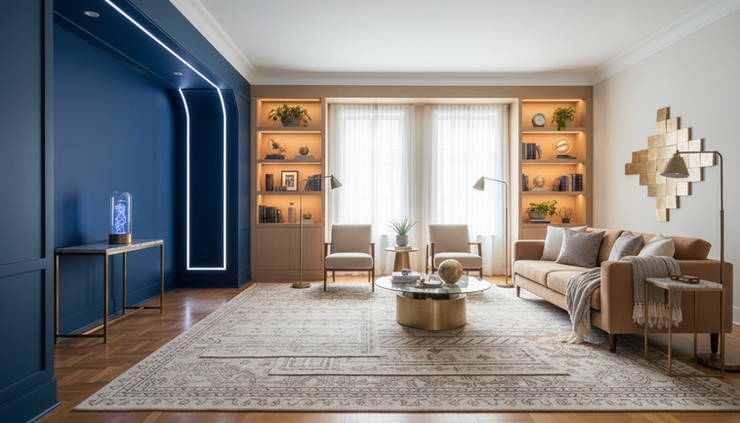
A deep blue accent wall, a painted built-in, or a saturated entry niche can create a sense of depth. The key is to balance it with light flooring, pale upholstery, mirrors, and clean sightlines.
A small foyer, for example, can become a memorable arrival point with:
A slim console table
A round mirror
A blue-gray wall color
A warm lamp
One sculptural object with a subtle sci-fi feel
That gives the space character without making the listing feel costume-like.
Choose furniture that reveals floor space
Small rooms often suffer from furniture that is too bulky. For a “bigger on the inside” effect, use pieces with visible legs, glass tops, rounded corners, and compact profiles.
A loveseat with raised legs can make a living room feel lighter. A nesting table can show function without crowding the room. A wall-mounted shelf can replace a heavy bookcase.
Let mirrors do quiet work
Mirrors are the closest staging gets to time-and-space trickery. Place them where they reflect light, greenery, or architectural detail. Avoid placing them where they reflect clutter, a hallway full of doors, or an unflattering blank wall.
Sumptuoza’s courses often appeal to people who love beautiful rooms but want a clearer method behind each choice. The TARDIS concept is a perfect exercise: every item should make the room feel larger, brighter, or easier to understand.
The console room shows how lighting can guide emotion
The TARDIS console room changes from Doctor to Doctor, but it always has a strong center. Light draws the eye. Shapes suggest movement. The room feels alive.
Staged homes also need a visual center.
In a living room, that might be a fireplace, a view, built-in shelving, or a conversation area. In a dining room, it may be the table and pendant light. In a bedroom, it is usually the bed wall.

Layer the lighting
One overhead fixture rarely does enough. A market-ready room usually needs several light sources:
Ambient lighting for general brightness
Task lighting for reading, cooking, or working
Accent lighting to highlight art, shelves, or texture
Sci-fi style works best in the accent layer. Think LED strip lighting under a floating shelf, a globe lamp on a side table, or a pendant with a clean geometric shape.
Keep the color temperature warm enough for comfort. Cool blue lighting may look futuristic, but it can make a home feel sterile in listing photos. A soft white glow feels more livable.
Create a central “console” moment
A console room has a focal hub. You can borrow that idea without being literal.
In a family room, arrange seating around a coffee table with a strong sculptural form. In a kitchen, clear the island and stage it with one beautiful bowl, a tray, or a vase. In a den, place a reading chair, small table, and floor lamp in a way that signals purpose.
Buyers should not wonder, “What is this room for?” Good staging answers before they ask.
Sumptuoza Home Staging Education courses can help aspiring stagers practice that habit. The point is not simply to make rooms attractive. The work is to create visual logic that supports the buyer’s tour.
Historic episodes inspire layered, character-rich rooms
One of the pleasures of Doctor Who is its range. One week may feel gothic and candlelit. Another may lean midcentury, industrial, Victorian, or futuristic. That range can inspire staging that suits the actual architecture of a home.
A 1920s bungalow, a new-build condo, and a suburban ranch should not all receive the same staging plan. The strongest designs listen to the property first.
Add vintage pieces with control
A vintage trunk, antique mirror, brass candlesticks, or weathered side table can bring warmth to a room. These pieces suggest history, which helps a home feel less flat.
The danger is clutter. Too many old objects can make a room feel dated. Use vintage items as accents, then pair them with clean upholstery, simple linens, and fresh art.
For example, a guest bedroom could include:
A streamlined upholstered bed
Crisp white bedding
A vintage wood nightstand
A modern lamp
One framed print with a celestial or botanical motif
The result feels layered, not old-fashioned.
Use texture to suggest time
Historic atmosphere often comes from texture, not props. Linen, velvet, wool, aged wood, ceramic, leather, and brushed metal all photograph well when used thoughtfully.
This can help a listing stand out online. Buyers scroll quickly. A room with texture catches attention because it feels touchable and real.
Training matters because restraint can be harder than adding more. A good Home staging course teaches when to stop, how to edit, and how to use detail in a way that supports the sale.
Alien worlds can inspire memorable accent choices
The alien worlds in Doctor Who are often defined by one strong visual idea: a color, a shape, a material, or a lighting effect. That is a useful staging lesson.
A listing does not need every room to be dramatic. In fact, it should not be. But one or two memorable moments can make a property easier to remember after a long day of showings.

Bring in sci-fi through shape
Sci-fi decor does not have to mean spaceships and gadgets. Shape can do the work.
Look for:
Orb lamps
Arched mirrors
Curved chairs
Ribbed glass
Hexagonal trays
Starburst hardware
Sculptural ceramic pieces
These items create a futuristic mood while staying broad enough for buyers with different tastes.
Use metallics sparingly
Chrome, brushed nickel, brass, and blackened metal can all suggest a sleek sci-fi mood. Use them as accents rather than a full-room finish.
A black metal floor lamp, brass picture frame, and smoked glass side table can feel refined. A room full of shiny surfaces can feel cold.
Try a celestial palette
A Doctor Who inspired palette can be rich but still marketable. Navy, charcoal, soft white, warm wood, muted teal, deep plum, and brass are easy to live with when balanced well.
For a more neutral listing, keep walls light and add sci-fi notes through pillows, art, lamps, and small accessories. That keeps the home appealing to a wider buyer pool while still giving it personality.
Sumptuoza’s education programs are useful for this exact reason. Creative staging is a skill, but sale-focused creative staging is a trained skill. It asks the stager to think about photography, buyer psychology, flow, and local market expectations.
Companions’ homes remind us to keep staging human
The most memorable parts of Doctor Who are not only the planets and monsters. The show often returns to ordinary homes, kitchens, bedrooms, and family spaces. Those scenes matter because they give scale to the adventure.
A staged home needs that same human grounding.
If every room feels like a concept, buyers may admire it without connecting to it. If the space feels warm, practical, and cared for, buyers can picture real life there.
Stage for daily rituals
Small lifestyle cues help buyers imagine a routine.
In a kitchen, use a simple coffee setup, a bowl of lemons, or a wooden cutting board. In a bedroom, use layered bedding and soft lamps. In a bathroom, use clean towels, a small plant, and minimal counter objects.
Avoid overly personal details. The goal is not to show one specific person’s life. The goal is to suggest comfort and function.
Give each room a role
A spare room should not feel like an afterthought. Stage it as a guest room, reading room, nursery, hobby space, or compact exercise area. Pick one clear use.
This helps buyers understand value. A vague room feels like extra square footage with no purpose. A staged room feels like a benefit.
Edit fan references before showings
A few subtle nods can charm buyers. Too many direct references can narrow the audience.
Better choices include:
Abstract galaxy art instead of character posters
A blue accent piece instead of a themed display
Sculptural lighting instead of novelty lamps
Clean-lined furniture instead of set-like props
This is where Sumptuoza Home Staging Education courses can help new stagers build judgment. A trained eye knows when a room has enough personality and when it needs editing.
How to use sci-fi elements without hurting resale appeal
Sci-fi inspired staging works best when it follows the same rules as any strong staging plan. The style can be imaginative, but the purpose stays practical.
Do this
Skip this
Do this
Skip this
Do this
Skip this
Use one or two futuristic accents in a room, such as an orb lamp, curved chair, or celestial print.
Filling shelves with collectibles, replicas, or objects that make the home feel too personal.
Balance dark colors with natural light, pale fabrics, mirrors, and warm wood.
Painting several rooms in intense colors that may distract buyers.
Stage around the property’s best feature, such as a fireplace, view, or large island.
Letting the theme compete with architecture or practical use.
A good rule: if the sci-fi piece helps the room feel more spacious, more memorable, or more polished, it may belong. If it only proves that someone loves the show, save it for an owner-occupied design project, not a listing.
A room-by-room guide to Doctor Who inspired staging
Here are a few ways to translate the show’s settings into real homes without going overboard.
Entryway
Use the “arrival” feeling of the TARDIS. Create a clean, intriguing first impression with a narrow console, mirror, blue or charcoal accent, and warm lamp.
Living room
Borrow the console room’s sense of center. Arrange furniture around a clear focal point. Add one sculptural piece, such as a round coffee table or globe lamp.
Dining room
Think of time travel dinner party, but keep it elegant. Use moody art, metallic candleholders, and simple table decor. Avoid heavily themed settings.
Bedroom
Use soft space-age calm. Try layered bedding, rounded lamps, muted navy accents, and blackout curtains that feel luxurious rather than theatrical.
Kids’ room or teen room
This is where you can be a little more playful. Choose star maps, planet prints, glow-in-the-dark ceiling details, or a reading corner with a cozy “mission control” feel. Keep major furniture neutral so the room still appeals widely.
Home office or flex room
Avoid making it feel like a command center full of screens and gadgets. Use a comfortable chair, strong lighting, shelves, and one cosmic art piece. The room should feel useful, not stressful.
Even with themed inspiration, each room should photograph cleanly and support the listing story. Sumptuoza’s courses can help aspiring stagers practice that balance through design principles, room planning, and client-ready decision-making.

The real estate value behind the fun
A Doctor Who inspired staging plan may sound playful, but the business reason is serious. Staging can help a property feel more complete, more photogenic, and easier to understand. It can reduce visual distractions and highlight the features buyers might miss in an empty or poorly arranged home.
The best staging does three things:
It helps buyers connect emotionally.
It makes rooms look clear and functional.
It supports better listing photos and showings.
That is why education matters for anyone who wants to work in this field. Creativity opens the door, but training helps turn that creativity into a service clients trust. Sumptuoza Home Staging Education courses give aspiring stagers a place to build that foundation, from styling choices to the practical thinking behind sale-ready rooms.
Ready to turn imaginative design ideas into real staging skills? Explore the Sumptuoza Home Staging Education courses and start building a stronger, more confident approach to staging.
A home does not need a time machine to feel full of possibility. It needs clear purpose, good light, smart editing, and just enough wonder to make buyers remember it after they leave.


