Project Hail Mary Inspired Home Staging Tips to Transform Your Space
- 7 days ago
- 8 min read
Updated: 4 days ago

A buyer decides how a home feels long before they study the square footage. They notice the light, the flow, the mood, and whether they can picture a life unfolding there. That is why staging is such a powerful part of real estate. It turns rooms into a story people can understand in seconds.
So what does a space mission survival story have to do with preparing a property for sale? More than it may seem.
Project Hail Mary is built around problem-solving, adaptation, isolation, discovery, and hope. Those same themes can inspire a fresh way to stage a home. Instead of treating rooms as separate decorating projects, think like a mission planner. Every item needs a purpose. Every space should support the goal. Every detail should help the viewer feel oriented, curious, and emotionally connected.

Why staging matters when a home hits the market
Home staging helps buyers see the potential of a property without having to mentally clear clutter, guess furniture scale, or imagine how awkward corners might work. It creates context.
An empty room can feel cold or smaller than it is. A crowded room can make a buyer focus on the seller’s belongings rather than the home. Strong staging lands between those extremes. It gives each room a clear role while keeping enough openness for buyers to imagine their own style.
In real estate, presentation affects perception. Buyers often compare multiple homes in a short window of time. A staged home that photographs well, feels clean, and has memorable moments can stand out.
Good staging can help with:
Room clarity
Buyers understand how each space works.
Emotional connection
A well-staged room feels calm, welcoming, and livable.
Photo appeal
Online listing photos become stronger when furniture, lighting, and color work together.
Perceived care
A clean, well-arranged home suggests the property has been maintained.
Home staging is not about covering flaws. It is about presenting the home honestly and at its best. That skill can be learned, practiced, and refined, which is where Sumptuoza Home Staging Education courses can be especially useful. They help stagers build a trained eye for layout, color, buyer psychology, and room-by-room planning.
What Project Hail Mary can teach us about staging
The story of Project Hail Mary centers on a high-stakes mission where resourcefulness matters. The main character faces uncertainty, solves problems under pressure, and learns how to connect across unexpected barriers. Those themes translate surprisingly well to staging.
A home on the market has its own mission. It must communicate quickly. It must adapt to buyer expectations. It must make people feel something.
Make every detail serve the mission
In a space mission, waste is costly. Every tool, container, surface, and system has a job. Staging works the same way.
A staged room should not feel packed with decorative filler. Each item needs to support the message of the room. A reading chair near a sunny window says, “This is a quiet place to unwind.” A slim console in an entry says, “This home has a welcoming arrival point.” A dining table set with simple dishware says, “Gathering here is easy.”
Before adding a piece, ask:
Does this item make the room easier to understand?
Does it improve scale, flow, or warmth?
Does it distract from a selling feature?
Would the room look stronger without it?
This kind of decision-making is a core staging skill. Sumptuoza Home Staging Education courses can help students learn how to edit with confidence, rather than simply decorate more.
Use light as a storytelling tool
Light plays a major role in science fiction because it signals safety, energy, and discovery. In a home, light does the same thing.
Open the blinds. Wash the windows. Replace burned-out bulbs. Use warm, consistent lighting where possible. If a room lacks natural light, add lamps at different heights to make it feel layered and comfortable.
Try this simple staging approach:
Dark corner
Flat living room
Small bedroom
Window with a view
Add a floor lamp, pale textiles, and a mirror placed to reflect light
Use table lamps and a soft rug to create warmth
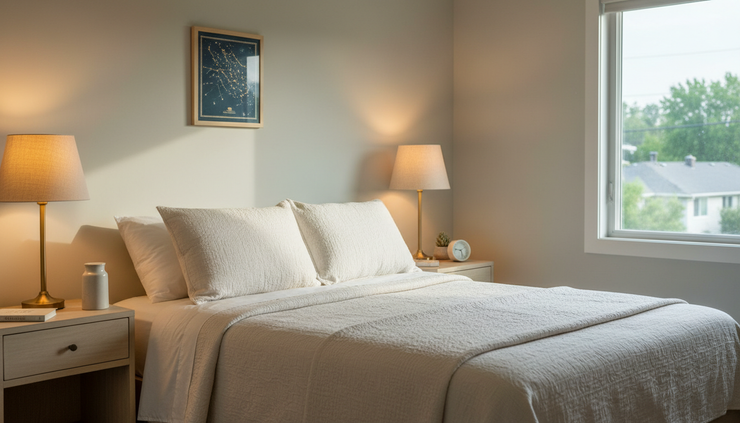
Keep bedding light, curtains simple, and surfaces clear
Remove heavy treatments and keep furniture from blocking the sightline
A buyer may not consciously think, “This lighting is well planned.” They simply feel better in the room.
Stage like a scientist and test what works
One of the most engaging parts of Project Hail Mary is the scientific mindset. The story rewards observation, testing, and adjusting. That mindset is perfect for staging.
Rather than guessing, walk through the home as if seeing it for the first time. Better yet, use a phone camera. Listing photos reveal problems that the eye misses in person.
Look for:
Furniture that blocks walkways
Decor that looks too personal
Rooms without a clear focal point
Dark areas in photos
Rugs that are too small
Art hung too high
Busy surfaces that draw attention away from the room
Take a photo, make one change, then take another photo. Move the chair. Remove two accessories. Switch on a lamp. Add a plant. Compare the results.
This test-and-adjust process is simple, but it builds confidence. It also reflects a professional habit taught in quality staging education. The Sumptuoza Home Staging Education courses focus on practical skills that help stagers make better choices, evaluate their work, and improve each project with intention.
Create a strong focal point in each room
A space mission needs a destination. A room needs one too.
A focal point gives the eye somewhere to land. In a living room, it might be a fireplace, a large window, or a conversation area. In a bedroom, it is usually the bed. In a dining area, it is the table. In a home office or flex room, it may be a clean work surface paired with good light.
Once the focal point is clear, reduce anything that competes with it. If the fireplace is beautiful, do not crowd it with accessories. If the view is the star, keep window treatments simple. If the bed anchors the bedroom, use balanced pillows and art to frame it.
Think of the room like a scene. The buyer should understand where to look without being told.
Turn isolation into comfort
A major theme in Project Hail Mary is isolation. It explores what it feels like to be far from the familiar, and how connection can restore hope. In staging, this theme offers a useful reminder. Empty or impersonal rooms can feel isolated. Warm, intentional rooms feel comforting.
This does not mean adding family photos, personal collections, or highly specific decor. In fact, those items usually make it harder for buyers to imagine themselves in the home.
The goal is universal comfort.
Add warmth without making the space too personal
Use texture, scale, and softness to make rooms feel lived in without feeling owned by someone else.
Good choices include:
Linen or cotton bedding
A throw blanket folded neatly over a chair
A ceramic vase with simple greenery
A woven basket near a sofa
Neutral art with soft movement
A tray on a coffee table with a book and small bowl
Color can help too. You do not need a fully beige home. A restrained palette with one or two gentle accent colors often works well. Soft blue, clay, sage, warm white, and muted gold can make rooms feel calm and current without overpowering them.
The key is restraint. Let the buyer feel invited, not instructed.

Use teamwork as a staging principle
Project Hail Mary also celebrates connection and cooperation. Progress comes from communication, trust, and learning how to work with another perspective. That idea matters in staging because no home exists in a vacuum.
A well-staged property supports the work of agents, photographers, sellers, and buyers. The staging should make the agent’s job easier, help the photographer capture strong images, and give buyers fewer reasons to hesitate.
Think about the full buyer journey
A buyer often sees the home in this order:
Listing photos
Description and details
Drive-up or exterior arrival
Entryway
Main living spaces
Kitchen
Bedrooms
Outdoor areas or bonus spaces
Staging should support that path. The entry should feel clean and welcoming. The living room should show scale and comfort. The kitchen should feel bright and functional. Bedrooms should feel restful. Outdoor areas should suggest easy use, even with simple seating and tidy planters.
This broad view is one reason professional training matters. A Home staging course can help connect design choices to real estate goals, so staging is not just pretty, but purposeful.
Sumptuoza Home Staging Education courses are designed to build that kind of practical thinking. They can help new and growing stagers understand what to prioritize, how to work room by room, and how to create spaces that support the sale.
Practical Project Hail Mary inspired staging tips
Use these ideas as a direct staging checklist inspired by the story’s core themes.
Plan the mission before moving furniture
Start with the property’s likely buyer and the home’s strongest features. Is the home best suited for a first-time buyer, a growing household, a downsizer, or someone who works from home? The answer shapes how each room should read.
Write down the purpose of each major space before staging it. If a room has become a catch-all, give it one clear role.
Edit like supplies are limited
Pretend every item must earn its place on board. Remove extra chairs, bulky side tables, stacks of books, seasonal decor, and anything that makes pathways feel tight.
Clear rooms photograph better. They also help buyers focus on architecture, light, and layout.
Use subtle science and space references
A Project Hail Mary inspired home should not look like a theme room. Keep references subtle and stylish.
Try:
A framed moon phase print in a hallway
A small telescope near a window
A star map in a child’s room or study
Sleek metallic accents in a living room
Round mirrors that echo planets
Deep navy used sparingly in pillows or art
These touches add imagination without distracting from the home.
Make problem areas feel useful
Awkward spaces are staging opportunities. A strange nook can become a reading corner. A wide landing can hold a slim console and art. A small spare room can become a compact office, nursery, or guest room.
The Project Hail Mary mindset says, “Use what you have.” Great staging does the same.
Create calm after tension
The story has pressure, risk, and uncertainty. A home showing should do the opposite. It should reduce friction.
That means:
No strong odors
No cluttered counters
No overfilled closets
No harsh lighting
No confusing room layouts
No loud personal style in main spaces
Buyers should feel that moving in would be easy.

Keep learning so every staging choice gets sharper
Staging is part design, part psychology, part real estate strategy. The more you study it, the easier it becomes to see what a room needs and what it can lose.
That is where Sumptuoza Home Staging Education courses can make a real difference. They offer a way to grow beyond instinct and develop a more reliable staging process. Whether the goal is to stage personal listings, start a staging business, or improve design confidence, structured education helps turn creative ideas into repeatable skills.
A Project Hail Mary inspired approach asks for curiosity, focus, and problem-solving. Those same traits can make a staged home feel more polished and more memorable.
To keep building your staging skills, explore the Sumptuoza Home Staging Education courses and find a course that fits your next step.
A well-staged home does more than look good. It gives buyers a clear path through the space and a reason to remember it. Treat each room like part of a mission, and transformation becomes much easier to achieve.


