Reacher TV Show Inspired Home Staging Tips for a Bold Modern Space
- Aug 30
- 8 min read
Updated: 4 days ago

A room does not need to shout to feel powerful. The strongest spaces often do less, but every choice has a job. That is one reason the Reacher TV show has become an unexpected source of inspiration for interiors: its visual world is direct, practical, and tough without feeling cluttered.
The show’s settings often lean into grounded Americana, clean lines, worn textures, neutral tones, and purposeful furniture. Nothing feels overly precious. Nothing feels randomly placed. That kind of visual discipline translates well to staging, especially for sellers and design-minded homeowners who want a space to feel confident, modern, and memorable.
Reacher-inspired staging is not about turning a living room into a crime-thriller set. It is about borrowing the show’s best visual cues: strength, simplicity, contrast, utility, and atmosphere. With the right balance, these ideas can make a property feel more intentional, more spacious, and more emotionally clear.
Why the Reacher look is showing up in staged homes
The popularity of Reacher fits into a larger design mood. Many homeowners and buyers are moving away from overly decorated rooms and toward spaces that feel grounded, easy to understand, and useful. The show’s visual language supports that shift.
Its interiors and locations often suggest movement, independence, and function. Think sturdy furniture, open walkways, practical lighting, muted color, and surfaces that look like they can handle real life. In staging, those details matter because buyers are not just looking at square footage. They are reading the room for clues.
A cluttered room can say, “This space is hard to live in.” A room with too many decorative themes can feel distracting. A Reacher-inspired room, when done well, says, “This space is capable, calm, and ready.”
That message works especially well in:
Modern condos with open floor plans
Townhomes that need a stronger identity
Suburban homes with dated finishes
Short-term rental properties that need a bold but approachable look
Bachelor pads or empty rooms that feel too cold without texture
This is where professional education can help. Sumptuoza Home Staging Education courses teach staging as a strategy, not just decorating. That distinction matters. Styling a room for personal taste is one thing. Preparing a space so a wide range of people can connect with it is another.
Build the room around strength and restraint
The Reacher aesthetic is not fussy. It avoids excess. That makes restraint the first rule.
Start by removing anything that weakens the room’s purpose. Extra chairs, small tables, random baskets, dated art, and too many throw pillows can make a space feel nervous. A strong room needs breathing room.
For a living room, build around three anchor pieces:
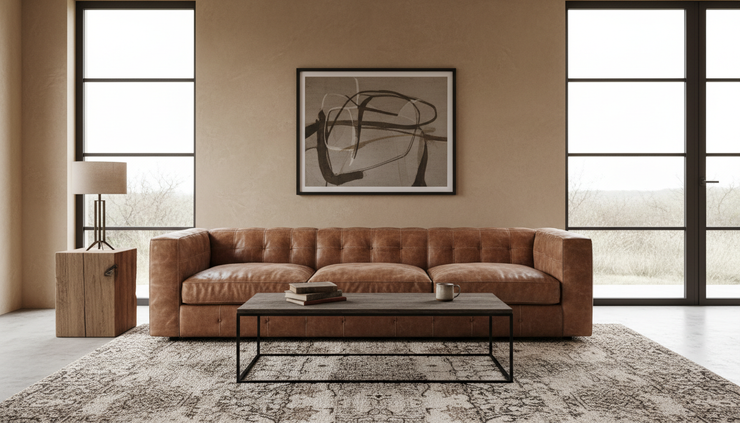
A sofa with a clean shape
A coffee table with visual weight
One strong accent chair or bench
These pieces should feel substantial, but not oversized. A deep leather sofa, a structured fabric sectional, or a simple wood-framed chair can create the right mood. Avoid anything too delicate, glossy, or ornate if the goal is a grounded modern space.
Color helps set the tone. Reacher-inspired staging often works best with a controlled palette:
Base tones
Depth tones
Texture tones
Warm white, oatmeal, stone, tan, soft gray
Charcoal, espresso, black, deep olive, navy
Cognac leather, aged wood, linen, jute, matte metal
The key is contrast. A pale wall with a black-framed mirror feels sharper. A neutral sofa with a dark wood table feels more grounded. A beige room with one olive throw and a matte black lamp gains depth without feeling busy.
Home staging succeeds when buyers can understand the room quickly. A restrained palette makes that easier.
Use rugged materials without making the space feel heavy
The show’s style often feels tactile. It suggests denim, leather, pavement, wood, brick, metal, and dust. In a home, those references can become beautiful staging tools.
The trick is to use rugged materials in polished ways. Too much dark leather or metal can make a room feel closed in. Too much rustic wood can push the design toward cabin style. Balance matters.
Try these combinations:
Cognac leather with cream linen
Matte black metal with warm oak
Charcoal upholstery with a natural jute rug
Stoneware vases with smooth white walls
Worn wood with crisp bedding
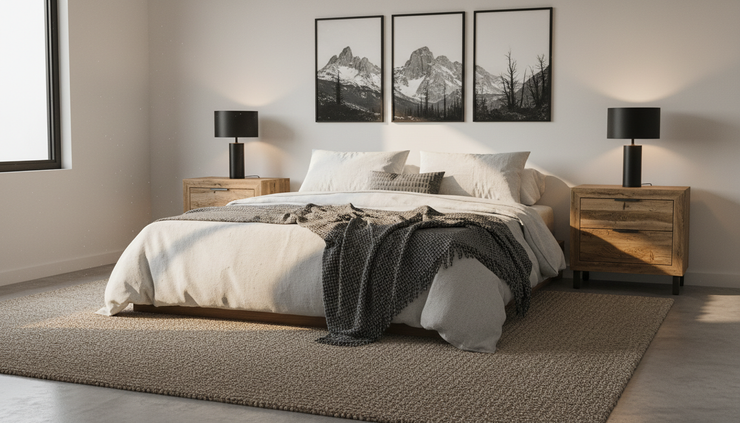
A bedroom can use this approach without feeling severe. Start with white or warm neutral bedding, add a charcoal or olive throw, use black or bronze bedside lamps, and bring in one piece of wood furniture. Keep the art simple. A landscape, abstract line drawing, or black-and-white architectural print can work well.
This is also a useful place to study staging choices through a course format. Sumptuoza Home Staging Education courses can help clarify why certain textures read as upscale while others read as cluttered or overly themed. Small differences change the emotional tone of a room.
Make every zone feel purposeful
One reason the Reacher visual style feels strong is that spaces tend to have clear purpose. A diner booth is for conversation. A motel room is for rest and planning. A street corner is for movement. The viewer understands each space fast.
Staged homes benefit from the same clarity.
A buyer should never have to ask, “What is this area for?” If a corner is empty, give it a role. If a room has awkward proportions, create zones that explain how to live there.
For open floor plans, use furniture to define areas:
Place the sofa so it frames the conversation zone
Use a rug to mark the living area
Add a console table behind a sofa if the room needs separation
Keep dining chairs pulled in and symmetrical
Leave clear paths from one area to the next
For small rooms, avoid tiny furniture scattered around the walls. That can make the room feel less useful. Instead, choose fewer pieces with better scale. A compact sofa, one chair, and a round table often feel stronger than five small pieces trying to do the same job.
For awkward bonus rooms, pick one identity. Stage it as a reading room, guest room, workout space, or media room. Do not combine every possible use. Confidence sells better than confusion.
Bring in practical lighting with atmosphere
Lighting in a Reacher-inspired space should feel useful, not decorative for its own sake. Think lamps with weight, warm bulbs, dark finishes, and focused pools of light.
Small lighting changes can shift the entire mood of a staged home:
Swap cool bulbs for warm white bulbs
Add a floor lamp near a reading chair
Use matching lamps in bedrooms for order
Place a table lamp on a console to soften an entry
Choose matte black, bronze, or wood lamp bases
Avoid relying only on ceiling lights. Overhead lighting can flatten a room and make it feel less inviting. Lamps create depth, especially in listing photos. They also help buyers imagine quiet evening use, which is powerful.
A strong entryway can use this idea well. Add a narrow console, a dark-framed mirror, one lamp, and a small tray. The result feels practical and composed. It gives the home a clear first impression.

Edit decor until the story is clear
Decor should support the staging story, not compete with it. Reacher-inspired spaces work because they do not feel over-explained. They leave room for imagination.
That does not mean bare rooms. Empty spaces can feel cold. The goal is selective detail.
Use decor that feels grounded:
Large-scale art instead of many small frames
Simple ceramics instead of shiny accessories
Books stacked in small groups
One sculptural branch arrangement
Neutral pillows with texture instead of loud patterns
A quality tray to organize coffee table items
A good rule is to remove one item from every styled surface before photos. Coffee tables, nightstands, shelves, and counters often look better with less than expected.
For shelves, avoid filling every inch. Use negative space. Stack a few books horizontally, add a ceramic object, leave one shelf partially empty, and repeat tones from the rest of the room. This creates order without making the space feel staged in a stiff way.
This is an area where Sumptuoza Home Staging Education courses can be especially helpful. Many people can tell when a room feels “off,” but they struggle to identify why. Training helps connect choices like scale, spacing, contrast, and sightlines to buyer perception.
Add boldness through contrast rather than clutter
A bold modern space does not require loud color. In fact, the Reacher-inspired look often feels strongest when the palette stays quiet and the contrast does the work.
Try adding contrast through:
Black window frames or curtain rods
A dark coffee table against a light rug
Deep green or charcoal pillows on a pale sofa
Oversized art with strong lines
A dark accent chair in a neutral room
Matte black cabinet hardware
If the home has builder-basic finishes, contrast can make it feel more current. For example, a plain beige living room can gain presence with black curtain rods, textured cream curtains, a cognac leather chair, and a large abstract print. The changes are simple, but the effect feels intentional.
Keep bold accents repeated. One black lamp can look random. A black lamp, black picture frame, and black table base feel connected. Repetition creates design confidence.
Keep kitchens and bathrooms clean, direct, and calm
Kitchens and bathrooms should borrow the cleaner side of the Reacher aesthetic. These rooms need to feel practical and sharp. Avoid over-styling them with too many props.
For kitchens:
Clear most countertop items
Keep one wood cutting board visible
Add a small bowl of citrus or apples
Use a simple linen towel
Remove magnets, personal notes, and extra appliances
For bathrooms:
Use white towels or warm neutral towels
Add one dark accent, such as a soap pump or tray
Keep counters open
Use eucalyptus or a single small plant
Remove personal products from the shower
The goal is not to make these rooms look unused. It is to make them feel easy to maintain. Practical calm is a major part of the appeal.

Use the Reacher influence without turning it into a theme
The fastest way to weaken this look is to make it too literal. Avoid props that reference the show directly. No novelty signs, staged weapons, fake case files, or motel-themed decor. Buyers should feel the influence, not see a costume.
A better approach is to translate the mood:
Instead of action-show props
Instead of dark, heavy rooms
Instead of themed decor
Instead of cluttered “character”
Use strong furniture silhouettes
Use warm neutrals with deep accents
Use texture, contrast, and edited surfaces
Use purposeful details
This keeps the home broad enough for many buyers while still giving it personality.
A Home staging course can help refine this balance, especially for anyone who wants to move beyond inspiration and make staging decisions with professional intent. The best staged rooms do not copy a source. They interpret it in a way that fits the property, the likely buyer, and the listing goals.
Give each room one memorable moment
Every well-staged home needs a few moments buyers remember after they leave. The Reacher-inspired version of this is not flashy. It is bold, simple, and visual.
Create one focal point per room:
In the living room, use a large piece of art over the sofa
In the bedroom, use crisp bedding with one dark throw
In the entry, use a strong mirror and lamp
In the dining area, use a wood table with simple black chairs
In the bathroom, use fresh towels and one sculptural object
Do not make every corner compete. When everything is a focal point, nothing stands out.
Professional stagers often think in terms of the camera, the walkthrough, and the buyer’s memory. Sumptuoza Home Staging Education courses cover this kind of decision-making in more depth, helping students understand how a room reads in person and in photos.
Learn the principles behind the look
The Reacher TV show has drawn attention to a style that feels direct, rugged, and modern, but the real lesson goes beyond one aesthetic. The strongest staging comes from clear choices. Use fewer items. Choose better scale. Add texture. Control the palette. Make every room easy to understand.
For homeowners, these changes can make daily spaces feel calmer and more pulled together. For sellers, they can help a property photograph better and leave a stronger impression during showings. For aspiring stagers, this style is also a useful study in how visual mood shapes buyer response.
For deeper training, practical examples, and professional guidance, explore the Sumptuoza Home Staging Education courses.
A bold modern space does not need excess to feel memorable. It needs purpose, contrast, and confidence. Borrow those lessons from Reacher, apply them with restraint, and the room will speak clearly the moment someone walks in.


