The Last Of Us TV Show Inspired Home Staging Tips for a Post Apocalyptic Chic Look
- Aug 27
- 8 min read
Updated: 4 days ago

A room does not need broken windows, barricades, or actual decay to borrow the mood of The Last of Us. The show’s strongest interiors work because they feel lived in, layered, and deeply human. Weathered wood, softened light, reclaimed objects, mossy greens, faded textiles, and quiet signs of survival create a look that is gritty without feeling cold.
That same balance can translate beautifully into staging and decor. The key is to capture the emotional pull of the aesthetic, not recreate a disaster zone. A staged home still needs to feel clean, safe, welcoming, and easy to imagine living in. Done well, a post-apocalyptic chic look can add texture, character, and story while keeping the property market-ready.

Why this aesthetic works for interiors
The visual world of The Last of Us is memorable because it mixes ruin with resilience. Nature pushes through concrete. Old homes show layers of time. Practical objects become beautiful because they feel useful and honest.
For staging, that creates a strong design lesson. Buyers and renters respond to rooms that feel grounded. Overly perfect spaces can look sterile. A little age, texture, and imperfection make a room feel more personal.
The goal is not to make a property look neglected. The goal is to use the show’s visual language in a controlled way:
Earthy colors instead of harsh brightness
Worn textures instead of glossy sameness
Natural greenery instead of polished accessories
Practical styling instead of clutter
Soft comfort against harder architectural details
This is where professional judgment matters. A skilled stager knows when a room feels cinematic and when it starts to feel themed. Sumptuoza Home Staging Education courses are useful for aspiring stagers because they teach that difference through design principles, buyer psychology, and room-by-room presentation strategies.
Start with a palette that feels weathered, not gloomy
The Last of Us look leans on colors that suggest age, nature, and survival. Think of a city slowly being reclaimed by plants, dust, rain, and time.
A staging-friendly palette might include:
Mushroom gray
Warm taupe
Faded olive
Charcoal
Rust
Clay
Deep forest green
Weathered brown
Creamy off-white
The trick is to keep the base neutral and use darker tones with care. A room painted entirely in charcoal may photograph poorly and feel smaller. A cream wall with an olive sofa, a rust pillow, and a blackened metal lamp feels more balanced.
Let green do the storytelling
Green is one of the easiest ways to reference the show without making the space feel theatrical. Use it through plants, textiles, art, and subtle paint choices.
Try:
A trailing pothos on a high shelf
A moss-colored throw blanket
Olive linen pillows
Botanical prints in simple wood frames
A muted sage accent chair
Avoid artificial vines covering the walls or props that feel like a haunted house. Staging needs restraint. One strong plant moment can do more than a dozen scattered references.
Keep the room warm enough to sell
A post-apocalyptic palette can become too cold if every surface is gray, black, or distressed. Balance it with warmth. Add tan leather, amber glass, woven baskets, vintage brass, wool rugs, and soft lampshades.
That warmth helps the room feel livable. Home staging is still about helping people imagine daily life in the space, even when the inspiration comes from a survival drama.

Use texture to create the feeling of history
Texture is the heart of this look. The show’s interiors rarely feel flat. They are layered with cracked paint, worn fabric, aged wood, metal, canvas, concrete, and greenery.
In a staged home, texture gives visual interest without adding clutter. It also photographs well, which matters for online listings.
Use a mix of materials:
Reclaimed or weathered wood
Aged metal
Natural fibers
Matte ceramics
Soft textiles
Coffee tables, benches, console tables, open shelving
Floor lamps, black iron curtain rods, simple hardware
Jute rugs, linen curtains, cotton blankets, woven baskets
Vases, bowls, planters, table accents
Layered bedding, pillows, throws, area rugs
Keep the finishes clean and intentional. Distressed does not mean dirty. A scratched antique trunk can look charming. Dusty shelves, stained upholstery, or chipped paint in the wrong place can signal poor maintenance.
This is one reason professional staging can enhance property appeal. A trained stager edits the room so every worn piece feels chosen. Sumptuoza Home Staging Education courses often focus on building that eye, the ability to use character while still presenting a property at its best.
Create a post-apocalyptic vibe without sacrificing comfort
The mistake many people make with themed design is going too literal. A buyer should not walk into a living room and feel like they have stepped onto a TV set. The room should feel stylish first, inspired second.
Aim for post-apocalyptic chic, not post-apocalyptic chaos.
Soften the hard edges
The aesthetic can include raw wood, exposed brick, metal, and concrete. Those elements need softness nearby.
Pair them with:
A thick area rug
Washed linen bedding
Oversized knit throws
Warm floor lamps
Upholstered seating
Sheer curtains
Pillows in muted earth tones
Comfort tells people the home is not just interesting, it is livable.
Use lighting to create mood
The lighting in The Last of Us often feels natural, dim, and atmospheric. For staging, dim should never mean dark. Buyers need to see the room clearly.
Use layered lighting instead:
A warm ceiling fixture
A table lamp near seating
A floor lamp in a shadowy corner
Battery candles on a mantel or tray
Soft window treatments that filter daylight
Choose warm bulbs rather than cool blue light. Warm light makes weathered textures look inviting and helps neutral colors feel richer.
Make practical objects part of the decor
One of the best lessons from the show is that useful objects can be beautiful. Instead of shiny accessories with no purpose, style the room with pieces that feel grounded.
Good choices include:
Stacked books with worn covers
A ceramic water pitcher
A canvas storage bin
A wooden stool used as a side table
A simple wool blanket over a chair
A metal lantern used decoratively
The room starts to tell a story. Someone rests here. Someone reads here. Someone makes tea here. That sense of life helps a staged space feel less generic.
Edit carefully so the style does not become clutter
A staged room needs breathing room. Even a rugged, layered aesthetic should feel organized.
Before adding more decor, ask three questions:
Does this piece help define the room’s purpose?
Does it add texture, warmth, or scale?
Would it distract from the home’s best features?
If the answer is no, remove it.
A post-apocalyptic-inspired space can quickly become crowded with crates, trunks, maps, metal objects, and plants. Use only the strongest pieces. Let the architecture and layout remain the focus.
Aspiring stagers can benefit from learning this editing process in a structured setting. A Home staging course from Sumptuoza Home Staging Education can help students practice how to style with intention, create focal points, and avoid overdecorating.
Stage the story room by room
The post-apocalyptic chic look works best when each room gets a lighter touch. The style should connect through color and texture, not repeat the same prop ideas everywhere.
Room | Staging idea | Keep it buyer-friendly by |
Living room | Use a weathered coffee table, olive textiles, and layered lighting | Keeping seating open and comfortable |
Kitchen | Add matte ceramics, wood cutting boards, and a small herb pot | Clearing counters so the space feels clean |
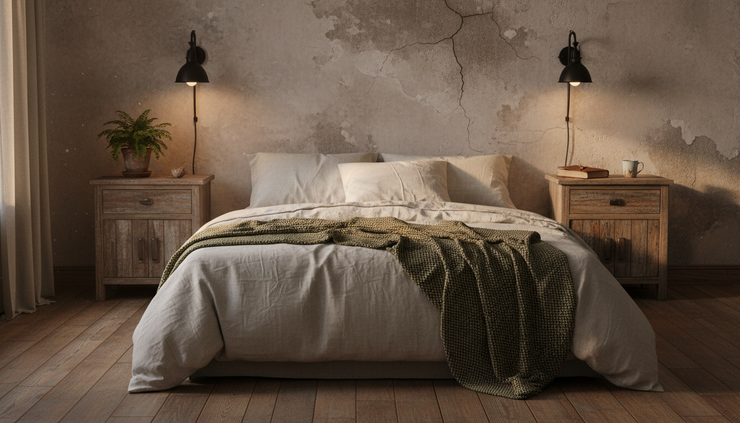
Bedroom | Choose linen bedding, muted greens, and simple black metal lamps | Making the bed look soft and restful |
Bathroom | Use stone accessories, amber bottles, and a small plant | Keeping towels bright and fresh |
Entryway | Style a wood bench, woven basket, and practical hooks | Avoiding too many coats, bags, or props |
Dining area | Use a rustic table, simple plates, and low greenery | Keeping the table setting minimal |
This approach gives the home a consistent mood without turning every room into a scene from the show.
Use art and accessories with restraint
Art can nod to the aesthetic in smart ways. Look for pieces that suggest abandoned landscapes, botanical growth, old architecture, or moody skies. Abstract art in olive, charcoal, cream, and rust can also work well.
Avoid direct references to the show in staged properties. Posters, fan art, logos, and recognizable imagery can make the design feel too personal. Staging should appeal to a wide range of buyers.
Better options include:
Black-and-white landscape photography
Pressed botanical prints
Abstract canvas art in earth tones
Vintage-style maps used sparingly
Simple sketches of buildings or forests
Accessories should feel collected, not scattered. Group items in threes, vary height, and leave open surfaces visible. A console table with a ceramic lamp, a low bowl, and one trailing plant can say enough.
Bring nature inside without making it wild
Nature reclaiming the built world is one of the show’s strongest visual ideas. In decor, plants bring that concept to life in a softer way.
Use plants to frame views, soften corners, and add color. Choose varieties that look relaxed and organic, such as pothos, snake plant, fern, olive tree, or philodendron.
Place them with intention:
A tall plant near a window
A trailing plant on a shelf
A small fern on a nightstand
Herbs in the kitchen
A single branch arrangement on a dining table
Do not overcrowd the home with greenery. Buyers should see healthy plants, not a space that feels overgrown.

Why professional staging matters for this look
A style inspired by The Last of Us requires a careful hand. The line between atmospheric and off-putting can be thin. Professional staging helps protect the value of the property while making the design memorable.
A professional stager considers:
Buyer expectations in the local market
Listing photography
Traffic flow
Room scale
Furniture placement
Lighting quality
Emotional response
The home’s strongest selling points
That last point matters most. The best staging does not hide the property under a theme. It uses design to draw attention to the home’s strengths. A textured rug can define an awkward living area. A tall plant can highlight ceiling height. Warm lighting can make an older home feel charming rather than dated.
Sumptuoza Home Staging Education courses are especially relevant for anyone who wants to turn creative taste into a professional skill. Inspiration is a start. Training helps stagers understand proportion, color, merchandising, client needs, and how to prepare homes for real estate photography.
Keep the look polished with a simple checklist
Before calling the space finished, walk through the home and check the balance.
Use this quick guide:
One rugged feature per zone
Choose the weathered table, the aged metal lamp, or the distressed bench. Do not use all three in one small area.
One strong green moment per room
A plant, olive textile, or botanical artwork is enough.
Softness in every seating or sleeping area
Add pillows, throws, rugs, and warm light.
Clear surfaces
Leave empty space on tables, counters, and shelves.
No fake damage
Avoid anything that makes the home look poorly maintained.
Clean always wins
Gritty style should still feel fresh, dust-free, and cared for.
A post-apocalyptic chic look succeeds when it feels intentional. It should suggest endurance, warmth, and character, not neglect.
The takeaway for aspiring stagers
The Last of Us aesthetic has more to teach than color and texture. It shows how powerful interiors become when they feel human. A room with worn wood, layered light, soft textiles, and natural greenery can tell a story without saying a word.
For staging, that story must stay focused on the property. Use the mood, not the mess. Use the texture, not the decay. Use the drama, but keep the comfort.
If this kind of styling sparks ideas for a staging career, explore the Sumptuoza Home Staging Education courses to build the practical skills behind memorable, market-ready interiors.
A post-apocalyptic chic home should feel like a place where life continues beautifully. That is the real design lesson, and it is one worth staging well.


